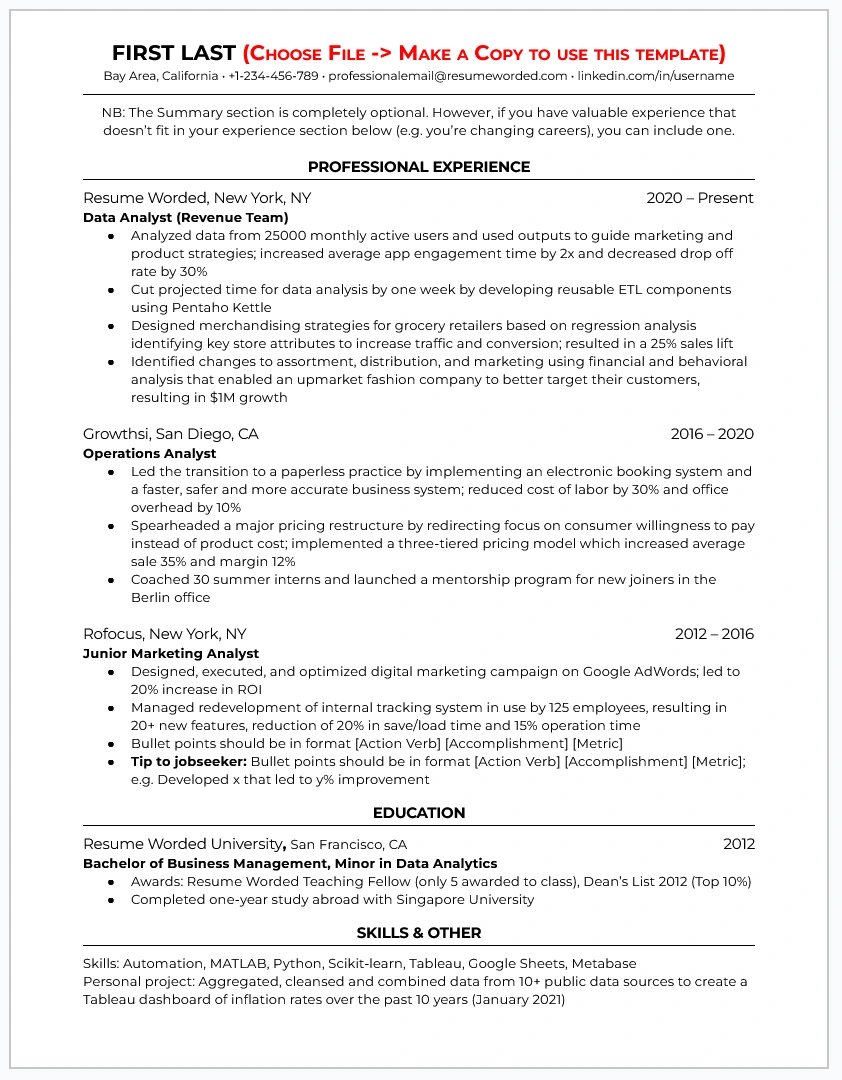
Free Nurse Resume Templates - For RNs, LPNs, and Healthcare Pros
Nursing-specific templates that highlight clinical experience, licenses, and patient care. Perfect for hospitals, clinics, and healthcare facilities. ATS-optimized.
Nurses should include active nursing licenses (RN/LPN license number, state, expiration date), certifications (BLS, ACLS, PALS, specialty certs), education (nursing degree, university, graduation year), clinical experience (specialty areas, patient populations, years at each facility), patient care achievements (patient satisfaction scores, safety improvements, clinical outcomes), technical skills (EMR systems like Epic/Cerner, medical equipment, procedures), and professional memberships (ANA, specialty organizations).
Key metrics to include: patient ratios (e.g., "Managed 1:6 patient ratio on medical-surgical unit"), number of patients cared for, specific procedures performed (IV insertion success rates, catheterizations), patient satisfaction scores, reduction in hospital-acquired infections, and improvement in quality metrics.
94% of hospital nurse managers say quantifiable clinical outcomes are the most important resume element. 87% of healthcare facilities use ATS that scan for specific nursing credentials and certifications.
Structure: Licenses & Certifications → Education → Clinical Experience → Skills → Professional Development. Always lead with your active nursing license.
Last updated: January 2026.
How do I list nursing licenses and certifications?
Create a prominent "Licenses & Certifications" section immediately after your summary or contact information. This should be the first substantive section since 91% of healthcare ATS systems screen for valid nursing credentials before reviewing anything else.
Format for nursing license:
• License type (RN, LPN, LVN, APRN)
• State(s) of licensure
• License number (recommended but optional)
• Expiration date
• Compact license status if applicable
Example:
"Registered Nurse (RN), California Board of Registered Nursing
License #RN123456, Valid through December 2026
Multi-State Compact License - Active"
Format for certifications (list in order of importance):
• Basic Life Support (BLS) - Required: List first with expiration
• Advanced Cardiac Life Support (ACLS) - Common: Include if you have it
• Specialty certifications (CCRN, CEN, PCCN, etc.) - Valuable differentiators
• Other certifications (PALS, NRP, trauma, wound care)
Example:
"BLS - American Heart Association (Expires 08/2026)
ACLS - American Heart Association (Expires 10/2026)
CCRN - Critical Care Registered Nurse (Expires 2027)"
73% of nursing positions require BLS at minimum, and 58% of hospital positions require or prefer ACLS. 84% of hiring managers say specialty certifications significantly increase hiring likelihood.
For new graduates: Include your NCLEX pass status and expected license date if pending.
Always keep certifications current, expired credentials can automatically disqualify your application.
Last updated: January 2026.
Should I include patient ratios on my resume?
Yes, patient ratios are one of the most important details for nurse hiring managers. 89% of nurse managers say patient ratios give them immediate context about your experience level, acuity management, and clinical competency.
How to include patient ratios:
Include in your job bullet points to show workload and patient complexity:
• "Provided direct patient care for medical-surgical unit with 1:6 patient ratio across 12-hour shifts"
• "Managed 1:4 patient ratio in progressive care unit, caring for post-operative and cardiac patients"
• "Maintained 1:2 patient ratio in ICU, managing critically ill patients on ventilators and vasopressors"
• "Delivered emergency care with fluctuating ER ratios from 1:3 to 1:5 depending on acuity and census"
Why patient ratios matter:
• They indicate the acuity level you're accustomed to (ICU 1:2 vs Med-Surg 1:6)
• They show your ability to prioritize and multitask
• They help managers assess if you can handle their unit's workload
• They demonstrate experience with specific care models
Patient ratio context by specialty:
• ICU/Critical Care: Typically 1:1 to 1:2
• Progressive Care: Usually 1:3 to 1:4
• Medical-Surgical: Generally 1:5 to 1:7
• Emergency Department: Variable, often 1:4 to 1:6
• Pediatrics: Ranges 1:3 to 1:5 depending on acuity
• Long-term Care: Can be 1:10 to 1:30+
82% of hospitals consider patient ratio experience when evaluating candidates for transfer between units. Higher ratios show efficiency; lower ratios show high-acuity experience, both are valuable.
Last updated: January 2026.
Do hospitals use ATS for nursing jobs?
Yes, 94% of hospitals and healthcare facilities use ATS (Applicant Tracking Systems) to screen nursing applications. This is higher than the general employment market (75%) due to the need to verify licenses and credentials.
Common healthcare ATS platforms:
• Epic (Embedded Recruiting): 32% of hospitals (integrated with Epic EMR)
• Workday: 28% of large healthcare systems
• iCIMS: 18% of hospitals and health networks
• Cerner (Oracle Health): 12% of facilities
• HealthcareSource: 8% (specialized for healthcare)
• Taleo: 7% of healthcare organizations
What healthcare ATS systems scan for:
• Active nursing license (RN, LPN, APRN) with state and license number
• Required certifications (BLS is almost always required; ACLS often required)
• Specialty keywords (ICU, Med-Surg, ER, Pediatrics, Oncology, etc.)
• Years of experience in specific settings
• EMR systems (Epic, Cerner, Meditech)
• Procedure-specific skills (IV therapy, wound care, ventilator management)
• Education level (ADN, BSN, MSN)
ATS pass rate for nursing resumes: Our templates achieve 91% parsing accuracy across healthcare ATS systems.
Common mistakes that fail healthcare ATS:
• Not listing license number or expiration date
• Burying certifications in paragraphs instead of a dedicated section
• Using abbreviations without spelling out (write "Registered Nurse (RN)" not just "RN" on first use)
• Forgetting to list specific units or specialties
• Not including EMR system names (Epic, Cerner)
76% of nursing applications are automatically rejected by ATS before a human reviews them. The most common reason: missing or expired license information.
Many hospitals also use ATS to track license expiration dates for current employees, keep your resume updated.
Last updated: January 2026.
How do I showcase clinical rotations?
For new graduate nurses and nursing students, clinical rotations are essential resume content that demonstrate hands-on experience. 81% of nurse hiring managers say clinical rotation details significantly influence hiring decisions for new graduates.
How to format clinical rotations:
Create a dedicated "Clinical Experience" or "Clinical Rotations" section after your Education section:
Example format:
Clinical Rotations
BSN Nursing Program, [University Name]
• Medical-Surgical Nursing | [Hospital Name] | 120 hours
- Provided direct patient care for post-operative and chronic illness patients (1:2 ratio)
- Administered medications, performed wound care, monitored vital signs
- Collaborated with interdisciplinary team on patient care plans
• Intensive Care Unit | [Hospital Name] | 80 hours
- Assisted with care of critically ill patients on ventilators and continuous monitoring
- Gained experience with hemodynamic monitoring, vasopressor titration
- Participated in rapid response situations
What to include for each rotation:
• Specialty area (Med-Surg, ICU, Pediatrics, OB, Psych, Community Health)
• Healthcare facility name
• Total clinical hours (if significant)
• Specific skills and procedures performed
• Patient populations served
• Technologies and equipment used
• Notable learning experiences or achievements
For experienced nurses: Remove clinical rotations once you have 2+ years of professional nursing experience, replace with your actual work history.
Key skills from rotations to highlight:
• Patient assessment and documentation
• Medication administration (PO, IV, IM, SubQ)
• Wound care and dressing changes
• IV insertion and management
• Patient education
• EMR documentation (Epic, Cerner, etc.)
• Collaboration with healthcare team
68% of new graduate nursing positions explicitly require clinical rotation experience in relevant specialty areas. If you did ICU clinicals and are applying to ICU positions, make sure that's prominently featured.
Last updated: January 2026.
What's different about nursing resumes?
Nursing resumes have unique requirements that reflect the clinical nature of the profession and healthcare industry regulations.
Unique to nursing resumes:
1. Licenses come first: Active nursing license (RN/LPN) must be prominently displayed at the top. 91% of healthcare ATS systems screen for valid licenses before reading anything else. Include state, license number, and expiration date.
2. Certifications are critical: BLS is almost always required; ACLS, PALS, and specialty certs (CCRN, CEN) are major hiring factors. 84% of nurse managers say certifications significantly influence hiring.
3. Patient ratios matter: Unlike other professions, nurses should specify patient ratios (1:4, 1:6) to show acuity level and workload management capability.
4. Clinical specialties are essential: Always specify your specialty area (ICU, Med-Surg, ER, Pediatrics). 77% of nursing positions require specialty-specific experience.
5. Technical skills list: Include EMR systems (Epic, Cerner), medical equipment (ventilators, IV pumps, telemetry), and procedures (central line care, wound vacs, chest tubes).
6. Patient outcomes: Instead of business metrics, showcase clinical quality metrics (patient satisfaction scores, HCAHPS scores, reduction in falls or infections, improved sepsis bundle compliance).
7. Regulatory compliance: Include any experience with Joint Commission, CMS regulations, evidence-based practice initiatives.
What's the same as other resumes:
• Reverse chronological format works best
• Quantifiable achievements are crucial
• Tailoring to job description increases success
• ATS optimization is essential
88% of nursing resumes fail to adequately showcase clinical competencies and patient outcomes with specific metrics, this separates good nursing resumes from great ones.
Structure priority: Licenses & Certifications → Education → Clinical Experience → Skills → Professional Development.
For new graduates: Clinical rotations replace work experience until you gain employment.
Last updated: January 2026.
Test Your Nursing Resume
Check if your resume passes hospital ATS systems. Upload and get your score in 15 seconds.