Common Resume Mistakes That Get Juniors Rejected (And How to Fix Them Before Applying)
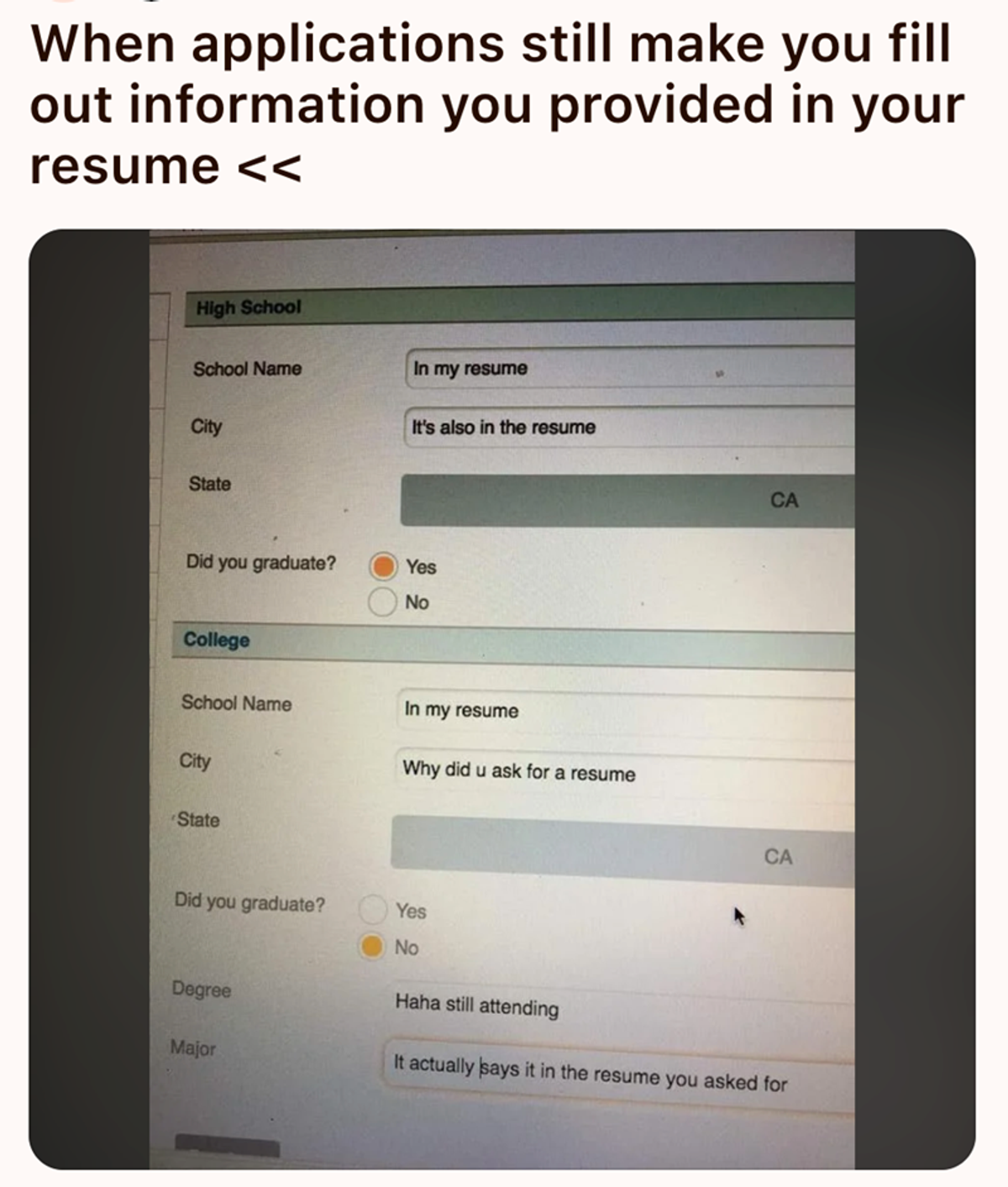
You've applied to 50 jobs. Maybe 100.
And the silence is deafening.
You refresh your email like it's a slot machine that refuses to pay out. Meanwhile, you're watching people with half your skills land interviews, and you're stuck wondering: "What am I doing wrong?"
Here's the truth: The system feels rigged because it kind of is.
Entry-level hiring in 2025 has essentially flatlined. Companies are planning just a 0.6% increase in junior hires compared to last year, and that's after they slashed budgets in 2024. Employers want "immediate productivity" from day one, which is corporate-speak for "we want senior talent at entry-level prices." Add AI automation eating away at traditional entry roles, and you've got a job market where getting ghosted is the norm, not the exception.
But here's what most people miss: It's not about your lack of experience. It's about how you're presenting it.
Your resume is getting rejected before a human even sees it. An ATS (Applicant Tracking System) is scanning your document for keywords, formatting compatibility, and relevance scores. If you fail that robot test, you're done. No second chances. No "but I'm actually qualified" explanations.
The good news? Once you understand what these systems are looking for and how to speak their language, you can turn your "no experience" into a competitive edge. Let's break down the exact mistakes that are tanking your applications and how to fix them.
Why Your Resume Is Dying in the ATS Black Hole
Let's get one thing straight: ATS software isn't evil. It's just stupid.
These systems scan your resume for specific keywords from the job posting, parse your formatting into a database, and assign you a relevance score. If your score is too low, a recruiter never sees your name. You're filtered out before you even enter the competition.
Here's what kills most resumes:
Fancy formatting. Tables, text boxes, images, headers, footers. Anything that looks "creative" to you looks like gibberish to an ATS. The bot can't read it, so it assumes you don't have the qualifications.
Missing keywords. If the job asks for "Python, React, and REST APIs" and your resume says "coding languages and web development," the ATS doesn't make the connection. You need exact matches.
Generic job titles. Calling yourself a "Tech Enthusiast" or "Problem Solver" sounds cool, but the ATS is searching for "Software Developer" or "Junior Engineer." Use industry-standard titles.
PDF formatting issues. Some ATS platforms struggle with PDFs, especially ones created in Canva or Google Docs with embedded graphics. A plain, single-column Word doc or simple PDF often performs better.
Want to know if your resume passes the bot test? Run it through a free ATS checker to see exactly what the system reads. You'll be shocked at how much gets lost in translation.

Avoid the 5 fatal resume formatting errors that trigger ATS auto-rejection. See real examples with fixes to pass robot filters and land interviews.
📝 Video Transcript

Mistake #1: Treating "Projects" Like Hobbies Instead of Experience
This is the biggest mistake juniors make. You have experience. You just don't realize it counts.
That GitHub repo where you built a task management app? That's software development experience. The hackathon where you shipped a working prototype in 48 hours? That's project delivery under tight deadlines. The portfolio site you coded from scratch? That's frontend development.
Stop putting these under a sad little "Projects" section at the bottom of your resume. Start framing them as real work experience.
Here's how:
Instead of listing projects like a grocery list, write them like job descriptions. Use action verbs. Quantify impact. Show what problem you solved and how.
Bad example:
- Built a weather app using React and API integration
Good example:
- Developed a responsive weather application using React and OpenWeather API, implementing real-time data fetching and geolocation features; deployed via Vercel with 95% uptime over 6 months
See the difference? The second version sounds like something you did at a job, not a weekend hobby.
If you worked on open-source contributions, treat those like contract work. "Contributed to [Project Name]" becomes "Collaborated with distributed team of 12 developers to implement feature enhancements for open-source CRM platform, resulting in 200+ GitHub stars."
Bootcamp projects? Those count too. Frame your capstone project as a real client engagement. Because guess what, that's basically what it was.
The hiring manager doesn't care where you got the experience. They care that you can do the work. Show them you can.

Mistake #2: Writing Generic Cover Letters (Or Skipping Them Entirely)
Let me guess: You've been told cover letters don't matter anymore.
That's half true. Generic cover letters don't matter. The ones where you swap out the company name and call it a day? Those get ignored.
But a cover letter that connects your story to the specific role you're applying for? That's your secret weapon. Especially when you don't have traditional experience.
Here's why: Resumes show what you've done. Cover letters show why it matters to this company, for this role, right now.
When you're fighting the "no experience" stigma, your cover letter is where you reframe the narrative. You're not "lacking experience." You're bringing fresh perspective, hunger to learn, and specific skills that map directly to their needs.
The problem is that writing tailored cover letters for every application takes forever. You're already applying to 10+ jobs a week. Who has time to craft a custom letter for each one?

This is where the AI cover letter writer becomes your unfair advantage. You paste in the job description, add your background, and it generates a targeted letter that actually connects your projects to business value. No more spending 45 minutes per application.
Here's what makes a cover letter work:
- Opening hook. Skip "I am writing to express my interest." Start with why you care about this specific company or role. "When I saw that [Company] is building tools to democratize financial literacy, it reminded me why I got into development in the first place."
- The bridge. This is where you connect your unconventional background to their needs. "During my bootcamp capstone, I built a budget tracking app that helped 50+ beta users reduce monthly expenses by an average of 18%. I know how to translate technical features into real user outcomes."
- The close. End with confidence, not desperation. "I'd love to discuss how my background in building user-focused applications could support your team's roadmap."
For a deep dive on writing cover letters when you don't have traditional experience, check out this complete guide for students and career switchers. It walks through the exact frameworks that work.
And if you're still confused about when to use a resume vs. a cover letter, here's the breakdown. Spoiler: You need both, and they serve completely different purposes.
Mistake #3: Using the Wrong Resume Format for Tech Jobs
Not all resume formats are created equal. And in tech, using the wrong one can tank your application faster than you can say "callback function."
The reverse-chronological format is king. This is the one where you list your most recent experience first and work backward. Why? Because it's what ATS systems expect. It's what recruiters are trained to scan. And it's the easiest format to parse quickly.
If you're using a functional resume (the kind that groups skills instead of showing a timeline), stop immediately. Recruiters hate these because they assume you're hiding employment gaps. ATS systems struggle to parse them.
Here's what your tech resume format should look like:
- Contact info at the top. Name, phone, email, LinkedIn, GitHub. Keep it simple. Don't use headers or footers because ATS often can't read them.
- Single-column layout. Two-column resumes look clean, but many ATS platforms read left-to-right across both columns, turning your carefully crafted bullet points into unreadable soup.
- Standard section headers. Use "Work Experience," not "Professional Journey." Use "Education," not "Academic Background." The ATS is looking for exact matches.
- Bullet points, not paragraphs. Each role should have 3-5 bullet points that start with action verbs. "Developed," "Implemented," "Optimized," "Collaborated." Make it scannable.
- Technical skills section. List your actual tech stack. "Languages: Python, JavaScript, Java. Frameworks: React, Node.js, Express. Tools: Git, Docker, VS Code." This is keyword gold for the ATS.
For the exact formatting breakdown with visual examples and ATS compatibility data, read the best resume format for 2025. It's based on what actually passes the screening algorithms.

Mistake #4: Not Optimizing for the Specific Job Posting
Here's a harsh truth: Your "one-size-fits-all" resume isn't getting you anywhere.
Every job posting is different. Every ATS scan is looking for different keywords. If you're sending the same resume to every application, you're basically playing the lottery and wondering why you never win.
The fix: Tailor your resume for each role. This doesn't mean rewriting everything. It means smart keyword optimization.
Here's the process:
- Step 1: Pull keywords from the job description. Look at the "requirements" and "qualifications" sections. What specific technologies are they asking for? What skills are mentioned multiple times?
- Step 2: Mirror their language. If they say "frontend development," don't say "client-side engineering." If they ask for "Agile methodology," use that exact phrase.
- Step 3: Reorder your bullet points. Put the most relevant achievements first. If they're hiring for a React role, lead with your React projects.
- Step 4: Adjust your technical skills section. Move the skills they're asking for to the top of the list.
This sounds time-consuming, but it's not. Once you have a master resume with all your projects and skills, you're just rearranging and emphasizing different parts for each application.
The ATS checker I mentioned earlier will show you exactly which keywords you're missing from the job posting. Run your tailored resume through it before you hit submit.
Mistake #5: Thinking Rejection Means You're Not Good Enough
Let's address the emotional side of this, because it matters.
Getting rejected over and over again messes with your head. You start questioning if you're cut out for this. You wonder if you should have picked a different career. You compare yourself to people who seem to be landing jobs effortlessly, and you feel like you're falling behind.
Here's what you need to hear: Most rejections have nothing to do with your actual skills.
Sometimes the req gets pulled. Sometimes they promote internally. Sometimes you're perfectly qualified but 200 other people applied and the recruiter only had bandwidth to interview 10.
In fact, the real reason you're not getting interviews usually comes down to resume presentation, not your background. Good candidates get screened out every single day because of formatting mistakes and missing keywords.
The job market in 2025 is brutal for entry-level roles. Youth unemployment in Canada sits around 13%. Entry-level hiring growth in the US has stalled. AI is automating away the simple tasks that used to be junior responsibilities.
But here's the thing: People are still getting hired. Companies are still desperate for talent, especially in tech. The difference between candidates who land interviews and those who don't often comes down to one thing: They learned how to beat the system.
Your Secret Weapon: Automating the Tedious Stuff
You now know what's killing your applications. You know how to fix it.
But let's be honest: Tailoring resumes, writing custom cover letters, checking ATS compatibility, and applying to 10 quality jobs per week is exhausting. It's basically a part-time job on top of your actual job search.
This is where HiringMessage becomes your unfair advantage.
The ATS Checker shows you exactly how your resume is being parsed by robots. It highlights missing keywords, formatting issues, and compatibility problems before you apply. No more guessing why you're getting rejected.
The AI Cover Letter Writer generates tailored cover letters in under 60 seconds. You paste in the job description and your background, and it creates a letter that connects your experience (yes, even bootcamp projects) to their specific needs. Real candidates are using this to stand out.
Take Joe, for example. He was getting nowhere with generic applications. Then he used the AI writer to craft a cover letter that explained how his open-source contributions directly related to Amazon's leadership principles. He got the interview. Because his letter told a story the recruiter actually cared about.
The best part? You get 3 free credits when you sign up, then 1 free credit every 24 hours. This means you can optimize your application game without dropping money on expensive career coaches or resume services.
Try the free ATS checker right now. Upload your current resume and see what the robots actually read. I guarantee you'll find at least three things you didn't know were broken.
The System: Consistency Beats Perfection
Here's the strategy that actually works:
- Apply to 5-10 quality jobs per week. Not 50 random postings. Not every "entry-level" role on LinkedIn. Focus on positions where you meet at least 60% of the requirements.
- Tailor each application. Use the keyword optimization process. Let the ATS checker validate your changes. Generate a custom cover letter.
- Follow up strategically. If you have a contact at the company or can find the hiring manager on LinkedIn, send a short message a week after applying. "I applied for [Role] and wanted to share why I'm excited about this opportunity."
- Track everything. Use a simple spreadsheet to log applications, follow-ups, and interview outcomes. This helps you spot patterns in what's working.
- Build in public. Keep pushing code to GitHub. Write about what you're learning. Share your projects on Twitter or LinkedIn. Hiring managers are searching for candidates, and your online presence is your portfolio.
The job search isn't a sprint. It's a war of attrition. The candidates who win are the ones who stay consistent, keep improving their materials, and don't let rejection derail their momentum.
You've got the skills. You've got the hunger. Now you've got the playbook.
Go fix those resume mistakes, optimize for the ATS, and start landing interviews. The jobs are out there. You just need to speak the language the system understands.
Frequently Asked Questions
Quick answers to common questions about this topic
How can I get a tech job with no experience?
Focus on translating personal projects, bootcamp work, and open-source contributions into professional experience on your resume. Frame these using action verbs and quantifiable outcomes, optimize your resume for ATS systems, and write tailored cover letters that connect your skills to business value. Consistency matters more than perfection, so apply to 5-10 targeted roles per week rather than spray-and-pray applications.
What are the biggest resume mistakes that get entry-level candidates rejected?
Poor ATS compatibility from fancy formatting, missing keywords that match the job posting, treating projects as hobbies instead of real experience, using generic cover letters or skipping them entirely, and failing to optimize each resume for the specific role. Running your resume through an ATS checker before applying helps catch these issues.
Do I really need a cover letter for entry-level tech jobs?
Yes, but only if it's tailored. Generic cover letters get ignored, but a targeted letter that explains why your unconventional background is actually an asset can differentiate you from hundreds of other applicants. Cover letters are especially critical when you don't have traditional experience, since they let you reframe the "no experience" narrative.
How do I know if my resume will pass the ATS?
Use an ATS checker tool to see exactly how systems parse your document. Look for single-column formatting, standard section headers like "Work Experience" and "Education," exact keyword matches from job postings, and avoid tables, images, or creative layouts. Save as a simple PDF or Word document, not a Canva design with embedded graphics.
What's the best resume format for tech roles in 2025?
Reverse-chronological format with a single-column layout works best. List contact info at the top without headers/footers, use standard section headers, include a keyword-rich technical skills section, and keep bullet points scannable with strong action verbs. This format is what both ATS systems and recruiters expect, making it easiest to parse and review quickly.
How many jobs should I apply to each week?
Focus on 5-10 quality applications per week where you meet at least 60% of the requirements. Each application should include a tailored resume optimized for that specific job posting and a custom cover letter. This targeted approach outperforms sending generic applications to 50+ roles because you're speaking directly to what each employer actually needs.
Why do I keep getting rejected even though I'm qualified?
The real reason is usually resume presentation, not your actual skills. Most rejections happen before a human reviews your application because ATS systems filter out resumes with formatting issues, missing keywords, or poor compatibility. Good candidates get screened out daily simply because they don't know how these systems work.
Related Articles

How to Get a Tech Job With No Experience in 2026 (Even When Every Entry-Level Role Asks for 3 Years)
Stop getting ghosted by ATS rejecting 75% of resumes. Transform projects into professional experience using exact keywords and tailored cover letters.

The Ultimate Tech Internship Resume Guide: GitHub, Projects, & Portfolios
Learn how to write a tech resume that passes ATS filters in 2025. Get past HR with GitHub links, proper skills formatting, and LaTeX-based templates.

Why Resumes Fail ATS: Key Errors to Avoid
Why resumes fail ATS in 2026: Learn about parsing, keyword issues, formatting mistakes, and critical tips for optimizing entry-level resumes.