How to Get a Tech Job With No Experience in 2026 (Even When Every Entry-Level Role Asks for 3 Years)
You've sent 50 applications. Maybe 100.
And you've gotten exactly zero responses. Not even a rejection email. Just silence.
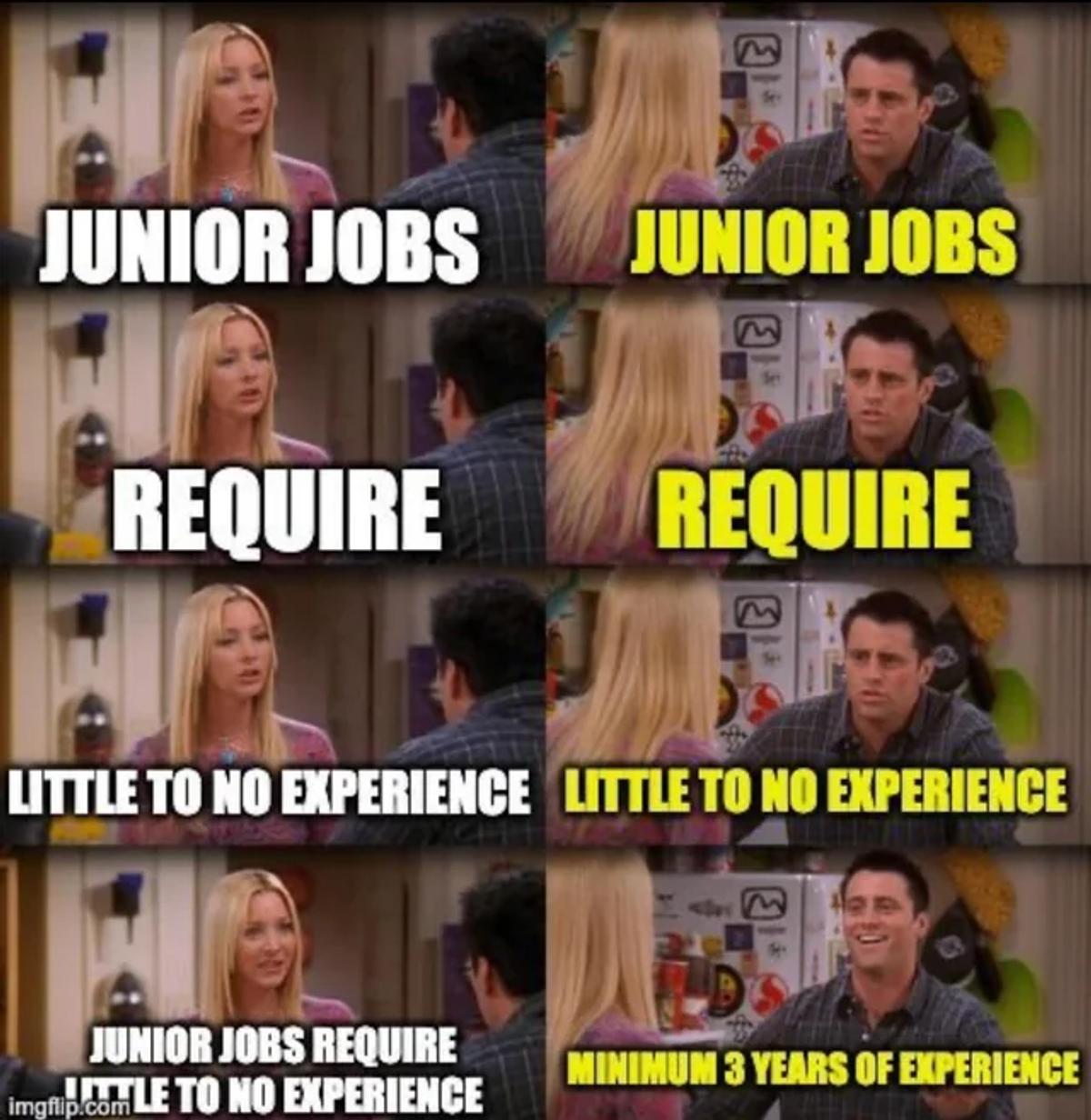
Meanwhile, you're scrolling through job boards, and every "entry-level" position is asking for 2-3 years of professional experience. The system feels rigged, and honestly? It kind of is.
Here's the reality: In 2025, entry-level hiring in the US increased by only 0.6% compared to the previous year. That's barely movement. In Canada, the job vacancy rate has dropped to 2.9%, and youth unemployment is sitting at 13%. Employers are prioritizing immediate productivity over potential, and AI is automating the very roles that used to be entry points for new grads.
But here's the thing. You don't need 3 years of corporate experience to land a tech job with no experience. You just need to understand how the game actually works.
The Real Villain: ATS is Ghosting You Before a Human Ever Sees Your Resume

Learn how Applicant Tracking Systems scan resumes, filter candidates, and why 75% get rejected before human review. Beat the ATS bot in 2025.
📝 Video Transcript
Let me guess. You've been told to "just network more" or "apply to 100 jobs a day."
That advice is garbage.
Here's why: 75% of resumes never reach a human. They get filtered out by an Applicant Tracking System (ATS), a software that scans your resume for keywords, formatting, and relevance before a recruiter even opens it.
If your resume doesn't match the job description's language, it gets tossed. If your formatting is too creative (two-column layouts, tables, graphics), the ATS can't read it, so it gets tossed. If you're using generic phrases like "team player" instead of specific technical skills, it gets tossed.
The real reason you're not getting interviews has nothing to do with your qualifications. It's that you're losing to a bot before a human even knows you exist.

Step 1: Turn Your "Projects" Into "Experience" (Because They're the Same Thing)
You don't have traditional work experience. So what?
You have projects. Bootcamp projects. GitHub repositories. Side hustles. Open-source contributions. Class assignments that actually solved real problems.
That is experience. You just need to frame it like it is.
Reframe Your Resume: Projects = Professional Work
Stop putting your projects in a sad little section at the bottom of your resume. Treat them like jobs.
Here's the format:
Project Title | Role (e.g., Full-Stack Developer)
Duration (e.g., June 2024 - August 2024)
- Built a [specific feature] using [specific tech stack] that [business outcome or user impact]
- Optimized [technical process] by [quantifiable result, like "30% faster load time"]
- Collaborated with [team size] to deliver [specific deliverable] on schedule
Notice the difference? You're not saying "I learned React." You're saying "I built a customer-facing dashboard using React and Node.js that reduced manual data entry by 40%."

Keywords Are Everything
Every job posting is a cheat sheet. The ATS is literally looking for exact matches between the job description and your resume.
If the job says "JavaScript," don't just write "coding." If it says "Agile methodology," include that phrase. If it mentions "cross-functional collaboration," work that in.
Here's how to do it without sounding like a robot:
- Read the job description and highlight repeated technical terms
- Identify the "must-have" skills in the requirements section
- Mirror that language in your experience bullets
For example, if the posting says "Experience with RESTful APIs," your bullet should say "Developed RESTful APIs to connect front-end and back-end services" instead of "Made APIs."
Use a tool like the Free ATS Checker to see how your resume scores against real job descriptions. It'll highlight missing keywords and formatting issues that are killing your chances.
Formatting: The ATS Needs to Read Your Resume
This is where most people lose. Your two-column resume with custom fonts and a photo might look great, but the ATS can't parse it.
Stick to this:
- Single-column layout
- Standard fonts (Arial, Calibri, Times New Roman)
- No tables, text boxes, or images
- Clear section headers like "Experience," "Education," "Technical Skills"
- Save as a .docx or .pdf (check the job posting for preference)
The best resume format for 2025 is the one that the ATS can actually read. Boring beats beautiful if it gets you the interview.
Technical Skills Section: List Everything
Create a dedicated "Technical Skills" section and list every relevant tool, language, and framework you've touched. Be specific.
Technical Skills:
Languages: JavaScript, Python, Java, SQL
Frameworks: React, Node.js, Express, Django
Tools: Git, Docker, VS Code, Postman
Other: RESTful APIs, Agile, CI/CD, Unit Testing
ATS systems scan this section first. The more matches, the higher your score.
Step 2: Your Cover Letter is Your Secret Weapon (If You Do It Right)
Here's the brutal truth: Most cover letters are worthless.
They're generic, templated, and say nothing about why you're a fit for this specific role. So recruiters ignore them.
But when done right, a cover letter is your chance to connect the dots between your "non-traditional" background and the role's needs.
Don't Summarize Your Resume. Tell a Story.
Your cover letter should answer one question: "Why should we take a chance on someone with no traditional experience?"
Here's the structure:
- Opening: Mention the specific role and why you're excited about it (not "I'm passionate about tech," but "Your team's work on [specific product] solves [specific problem] in a way I haven't seen before")
- Bridge: Connect your project experience to a business outcome they care about ("In my capstone project, I built a web app that reduced manual reporting time by 50%, similar to the automation challenges your team is tackling")
- Skills proof: Highlight 2-3 technical skills from the job description and show you've used them
- Close: Show you understand their goals and want to contribute
Tailor Every Single One
I know. It's exhausting. But sending 50 generic cover letters gets you 50 rejections. Sending 10 tailored ones gets you interviews.
The difference? You're showing you understand the company's challenges and you're ready to solve them.
If you don't have time to write custom cover letters for every application, use the AI Cover Letter Writer to generate tailored drafts in seconds. Feed it the job description and your experience, and it'll output a personalized letter that hits the right keywords and tone.
For more detailed guidance, check out how to write a cover letter with no experience.
Cover Letter vs. Resume: They Do Different Jobs
Your resume lists what you've done. Your cover letter explains why it matters.
One gets you past the ATS. The other gets you the interview. You need both. Here's why you need both for entry-level jobs.

Step 3: The Secret Weapon (HiringMessage.com)
Let's be real. You're applying to dozens of jobs. Writing custom resumes and cover letters for each one is a full-time job in itself.
That's where HiringMessage comes in.
What It Does
HiringMessage is built for people like you: entry-level candidates trying to break into tech without 3 years of corporate experience.
It has three core tools:
1. ATS Checker
Upload your resume and paste the job description. It'll score your resume, highlight missing keywords, and tell you exactly what's keeping you from passing the ATS filter.
2. AI Cover Letter Writer
Paste the job description and your experience. The AI generates a fully customized cover letter that connects your projects to the role's requirements. No generic templates. No fluff.
3. Experience Miner
Struggling to turn your bootcamp projects or coursework into professional-sounding bullets? This tool extracts the value from your experience and rewrites it in a way that resonates with recruiters.
The Joe Story
Joe was a bootcamp grad with zero corporate experience. He applied to 80 jobs and got 2 interviews.
Then he started using HiringMessage. He ran his resume through the ATS Checker, fixed his formatting, and used the AI Cover Letter Writer to tailor every application.
Three weeks later, he landed an interview at Amazon. His recruiter told him his cover letter stood out because it directly addressed the team's challenges and showed he'd solved similar problems in his projects.
That's the difference a tailored application makes.
Free to Start
You get 3 free credits when you sign up. After that, you earn 1 free credit every 24 hours. No credit card required to try it.

Step 4: The System (Apply Smarter, Not Harder)
Forget "spray and pray." Applying to 100 jobs with a generic resume gets you 100 rejections.
Here's the system that actually works:
Target 5-10 Quality Jobs Per Week
Find roles where your skills overlap with at least 60% of the requirements. Read the job description carefully. Research the company on LinkedIn. Check their recent blog posts or product updates.
Then customize your resume and cover letter for each one using HiringMessage.
Track Everything
Keep a spreadsheet with these columns:
- Company name
- Job title
- Date applied
- ATS score
- Tailored keywords used
- Follow-up date
This helps you identify patterns. If you're getting rejected after every application to "Senior Developer" roles, pivot to "Junior" or "Associate" roles.
Follow Up (Smartly)
One week after applying, find the hiring manager or recruiter on LinkedIn. Send a short message:
"Hi [Name], I applied for the [Role] position last week and wanted to express my continued interest. I'd love to chat about how my experience with [specific skill] could support your team's work on [specific project]."
Keep it under 3 sentences. Don't be pushy. Just show you're engaged.
Build in Public
While you're applying, keep working on projects. Push code to GitHub. Write technical blog posts. Share what you're learning on LinkedIn or Twitter.
Recruiters search for keywords like "JavaScript," "React," or "Python" on LinkedIn. If your posts and profile highlight those skills, you become discoverable.
The Spicy Truth: Most Job Search Advice is Outdated
Let's talk about the advice you've probably heard 100 times.
"Just network!"
Networking is great. But when you're an entry-level candidate with no connections, cold LinkedIn messages get ignored. You need something on paper (a resume, a portfolio, a cover letter) that proves you can do the work.
"Apply to as many jobs as possible!"
Volume doesn't work when the ATS is filtering you out. Quality beats quantity every time.
"You need a referral to get hired."
Referrals help, but 60% of entry-level hires still come from direct applications. Your resume and cover letter matter more than you think.
"Just be yourself!"
Cool. But if "yourself" doesn't speak the ATS language, you're not getting past the first filter. You need to frame your experience in the terms the system understands.
The game has changed. The old advice doesn't work anymore because the barrier isn't talent or potential. It's the ATS and the way employers filter candidates before you even get a shot.
You Don't Need Permission. You Need a Better System.
Here's the bottom line.
You're not losing because you lack experience. You're losing because your resume isn't optimized for the ATS, your cover letter is generic, and you're not applying strategically.
The candidates who break through in 2025 aren't the ones with the most internships. They're the ones who understand how to position their projects as professional experience, tailor their applications to beat the ATS, and show they can solve real business problems.
That's it. That's the game.
So stop sending the same resume to 50 companies and wondering why you're getting ghosted. Start treating every application like a mini-project: research the company, match the keywords, tell a compelling story, and prove you're worth the bet.
And if you need help automating that process, HiringMessage.com is built exactly for that. Try it out. See how much your ATS score improves. Land the interview.
You've got this.
Frequently Asked Questions
Quick answers to common questions about this topic
Can I really get a tech job with no experience in 2025?
Yes, but you need to position your non-traditional experience correctly. Bootcamp projects, open-source contributions, and personal apps count as real experience if you frame them with business outcomes and technical skills. Employers care about what you can do, not just where you've worked.
What are the most important ATS resume keywords for entry-level tech jobs?
Focus on the specific technologies and frameworks listed in the job description. Common keywords include: JavaScript, Python, React, Node.js, SQL, Git, Agile, RESTful APIs, and any tools mentioned in the requirements. Always mirror the exact language from the posting.
How many jobs should I apply to per week if I have no experience?
Aim for 5-10 highly targeted applications per week. Customize your resume and cover letter for each one. Quality applications with tailored keywords and personalized cover letters outperform mass-applying with generic materials.
Do I really need a cover letter for entry-level tech jobs?
Yes. Your resume lists your experience, but your cover letter explains why your bootcamp projects or self-taught skills make you a fit for this specific role. It's your chance to connect the dots and show you understand the company's challenges.
How do I know if my resume will pass the ATS?
Use an ATS checker tool to scan your resume against the job description. It'll show you missing keywords, formatting issues, and give you a score. Tools like the Free ATS Checker can help you optimize before applying.
What's the best resume format for entry-level tech jobs in 2025?
Stick to a single-column layout with standard fonts and clear section headers. Avoid tables, graphics, and creative formatting that confuses ATS software. Save as .docx or PDF depending on the job posting's instructions.
How long should my cover letter be?
Keep it under 300 words or about 3-4 short paragraphs. Focus on one specific project or skill that matches the role's needs, explain the impact, and close with enthusiasm. Short, targeted, and tailored beats long and generic every time.
Related Articles

The Ultimate Tech Internship Resume Guide: GitHub, Projects, & Portfolios
Learn how to write a tech resume that passes ATS filters in 2025. Get past HR with GitHub links, proper skills formatting, and LaTeX-based templates.

Why Resumes Fail ATS: Key Errors to Avoid
Why resumes fail ATS in 2026: Learn about parsing, keyword issues, formatting mistakes, and critical tips for optimizing entry-level resumes.

how to write a cover letter for resume in 2026 (0 experience needed)
Your resume isn't the problem, your cover letter is. Learn how to write a cover letter that beats the bots and gets you interviews in 2026's brutal job market.