Cover Letter vs. Resume: What’s the Difference & Do You Actually Need Both?
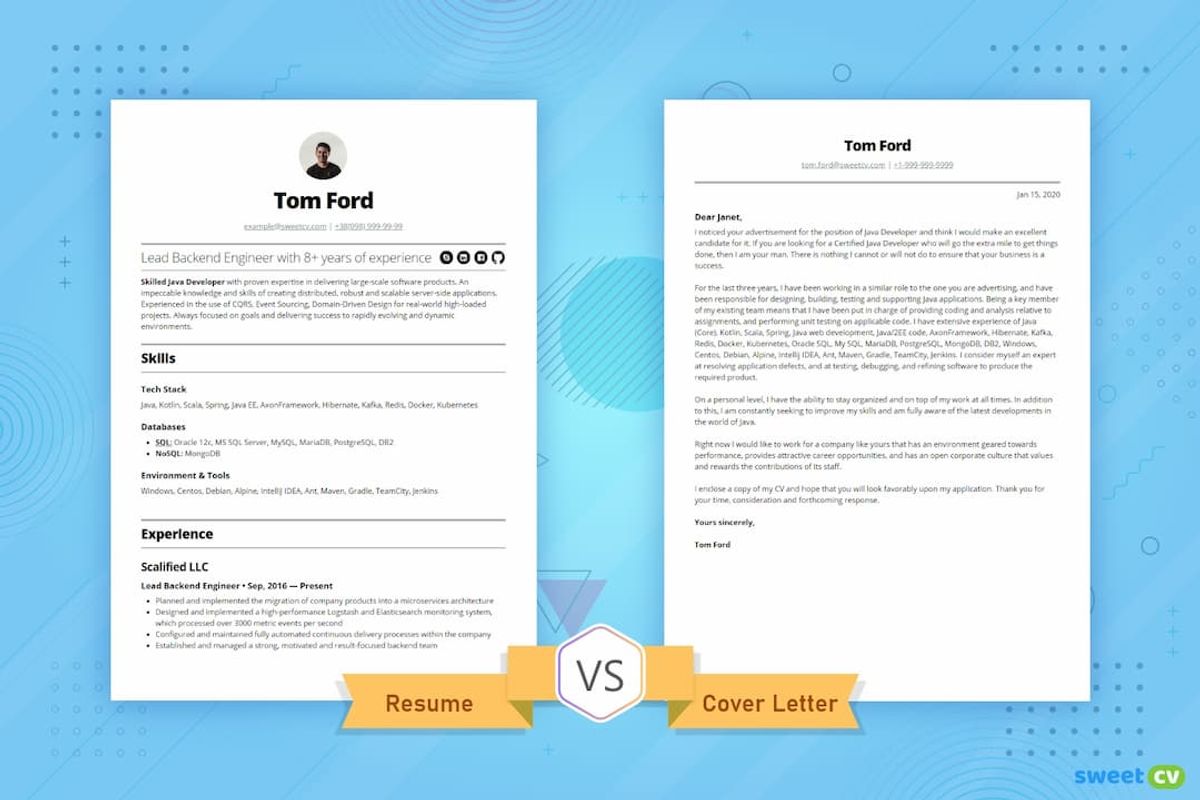
You have spent hours perfecting your resume. You are finally ready to hit "Apply." And then you see it.
Optional: Upload Cover Letter.
Do you skip it? Do you write one? Is it just a repeat of your resume?
If you are confused, you are not alone. This is the #1 question I get from students applying to their first tech jobs. The confusion leads to paralysis, and paralysis leads to missing the deadline.
Let’s clear this up once and for all. Here is the difference between the two documents, and the 3 Golden Rules for writing a cover letter that actually gets read (even if you have zero experience).
The "Dynamic Duo": Resume vs. Cover Letter
Think of your application like a movie trailer.
The Resume is the "Specs Sheet."
It is factual, cold, and chronological. It tells the recruiter what you did, where you did it, and when. It is a list of ingredients: Python, SQL, Dean's List, 2024 Graduate.
The Cover Letter is the "Story."
It connects the dots. It tells the recruiter why those ingredients matter. It explains why a Biology major is applying for a Data Science internship. It shows your personality, your passion, and your communication style.
The Verdict: Do You Need Both?
If the application says "Optional," the answer is YES.
Why? Because 50% of applicants will be lazy and skip it. Writing one instantly puts you in the top half of the pile. It is your only chance to speak directly to the human before the interview.
How to Write a Cover Letter with No Experience: 3 Golden Rules
If you are sitting there thinking, "I just go to class, I don't have a job history to write about," stop.
When you are entry-level, you aren't selling history. You are selling potential. Your cover letter is the perfect place to explain that potential.
Here are the three rules to follow so you don't sound like a robot.
Rule #1: Don't Summarize Your Resume
This is the biggest mistake rookies make.
- Bad: "As you can see on my resume, I learned Java in 2023."
- Good: "During my final year project, I used Java to build a scheduling app that solved a real problem for 50 students."
Your resume lists the skill; your cover letter tells the story of how you used it.
Rule #2: The "Hook" Opening
Recruiters read hundreds of letters a day. If you start with "I am writing to apply for..." they are already asleep.
Start with a hook. Mention a specific project the company is working on, or a specific value you admire.
- Example: "I’ve been following [Company Name]’s transition to sustainable energy, and I want to bring my background in electrical engineering to your new solar initiative."
Rule #3: Quantify Your Passion
"I am a hard worker" means nothing. Everyone says that. Prove it.
Instead of saying you are passionate about coding, tell them about the hackathon you stayed up for 24 hours to finish.
The Hard Part: Staring at a Blank Screen
Knowing the rules is easy. Actually writing the letter is hard.
It is incredibly difficult to stare at a blank screen and try to sound professional without sounding stiff. You second-guess every sentence. You worry about formatting. You wonder if you are bragging too much or not enough.
Most students freeze up here. They either skip the cover letter entirely or copy-paste a generic template from Google that the recruiter has seen 1,000 times.
The Solution: Don't Fight the Cursor
You could spend your Sunday afternoon stressing over opening sentences, or you could fix this in 52 seconds.
I built HiringMessage.com because I was tired of watching my talented friends get rejected just because they weren't "writers."
We aren't just another "resume builder." We are an application engine designed specifically for this problem.
Why This Beats Writing It Manually
1. The "Experience Miner"
Our AI doesn't just spellcheck you. It acts like a strict career coach. It asks you specific questions to dig out those class projects and skills you didn't even know counted as experience. You answer simple questions; we build the professional narrative.
2. Tailored to the Job Description
A generic cover letter is trash. Our AI analyzes the exact job description you are applying for and inserts the keywords the hiring manager is looking for. It aligns your limited experience directly with their requirements.
3. Perfect Code (LaTeX)
Just like our resumes, our cover letters are built on LaTeX technology. This means your letter isn't just a Word doc; it's a clean, high-level PDF that looks professional to humans and reads like perfect code to the ATS scanners. You get the tech advantage without writing a line of code.
Real Results
"I got 3 interviews in one week! After months of silence, my new ATS-optimized resume and cover letter finally got through." — Sarah T., 4th Year Eng.
Stop Getting Rejected by Robots
You have the skills. Don't let a bad cover letter (or no cover letter) keep you from the job.
Step 1: Go to HiringMessage.com.
Step 2: Use our Free ATS Checker to see if your current resume is even getting through.
Step 3: Generate a tailored cover letter that tells your story perfectly.
Related Articles

How to Get a Tech Job With No Experience in 2026 (Even When Every Entry-Level Role Asks for 3 Years)
Stop getting ghosted by ATS rejecting 75% of resumes. Transform projects into professional experience using exact keywords and tailored cover letters.

The Ultimate Tech Internship Resume Guide: GitHub, Projects, & Portfolios
Learn how to write a tech resume that passes ATS filters in 2025. Get past HR with GitHub links, proper skills formatting, and LaTeX-based templates.

Why Resumes Fail ATS: Key Errors to Avoid
Why resumes fail ATS in 2026: Learn about parsing, keyword issues, formatting mistakes, and critical tips for optimizing entry-level resumes.