How to Get a Tech Job with No Experience (When You're Being Ghosted)
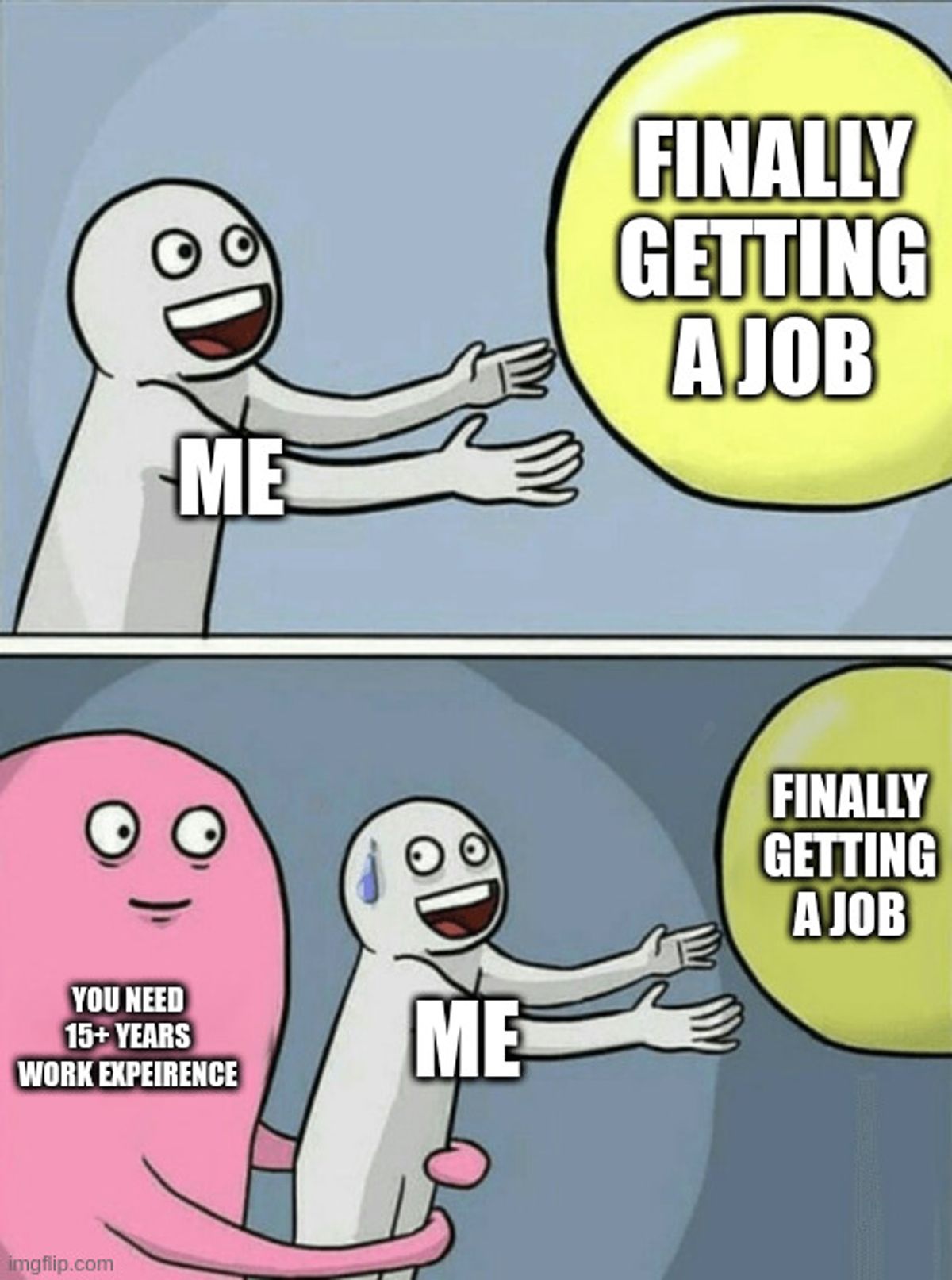
You got zero responses. Maybe one automated rejection if you're lucky.
You're starting to think the system is rigged. You're not wrong. Entry-level hiring in 2025 is essentially frozen.
Employers are only planning a 0.6% increase in new grad hiring compared to last year. Meanwhile, AI is eating entry-level roles for breakfast, and companies now expect "immediate productivity" from people who literally just graduated.
The system feels broken because it is. But here's the thing: the game isn't fair, but it's beatable.
This isn't another "just network harder" lecture. This is the actual playbook for landing a tech job with no experience, the stuff bootcamp grads and career switchers are using right now to break through the ghosting.
Why You're Getting Ghosted (It's Not You)
Let's get uncomfortable for a second.
Your resume probably never made it to a human. About 75% of resumes get filtered out by Applicant Tracking Systems before anyone sees them.

Learn how Applicant Tracking Systems scan resumes, filter candidates, and why 75% get rejected before human review. Beat the ATS bot in 2026.
📝 Video Transcript
These ATS robots scan for keywords, formatting, and "relevant experience"- and if your resume says "Computer Science Student" instead of "Software Developer," you're cooked.

The ATS doesn't care that you built three React apps or that you taught yourself Python in six months. It's looking for exact keyword matches and traditional work history. When you have neither, you're invisible.
Here's what makes it worse: entry-level roles in Canada have seen job vacancies drop to 2.9%, and youth unemployment is hovering around 13%. In the US, "entry-level" postings now routinely ask for 2-3 years of experience, which is insane, but that's where we are.
The cruel irony? Companies are desperate for talent. They're just terrible at finding it.
The Anti-Advice Section: What NOT to Do
Before we get to the fix, let's kill some bad advice that's wasting your time.
"Just apply to more jobs": Wrong. If your resume and cover letter aren't beating the ATS, applying to 200 jobs won't help. You'll just get ghosted 200 times. Quality beats quantity when the bots are screening you out.
"Network your way in": Partially helpful, but unrealistic as your primary strategy. Most students don't have connections at Amazon or Google. Informational interviews are great, but you still need an ATS-friendly resume when someone refers you internally.
"Use a creative resume to stand out": Terrible idea. ATS systems can't parse columns, graphics, or tables. That beautiful two-column Canva template is destroying your chances. The Real Reason You're Not Getting Interviews breaks down exactly how formatting kills applications.
"Lie about your experience": Don't. You'll get caught in the interview or background check. Plus, you don't need to lie, you just need to reframe what you've already done.
The real problem isn't that you lack experience. It's that you're not translating your projects into the language ATS systems and hiring managers understand.
Step 1: Turn Your Projects Into "Experience"
Here's the secret: experience doesn't mean a corporate job. It means you solved real problems and delivered results.
Your GitHub projects? Those are experience. That portfolio site you built? Experience. The Python script you wrote to automate your coursework? Experience.
You just need to frame it correctly.
The Format That Actually Works
First, fix your resume format. Single-column layout. No tables. No graphics. Standard section headers like "Experience" and "Education." The Best Resume Format for 2025 explains exactly why this matters, ATS systems literally cannot read fancy layouts.
The Experience Section Transformation
Instead of a "Projects" section that screams "I'm a student," create an "Experience" section with this structure:
Project Title or Role (e.g., "Full-Stack Developer")
Personal Project or Organization Name
Dates (Month Year - Month Year)
- Built responsive web application using React and Node.js with 500+ active users
- Implemented RESTful API with JWT authentication, reducing login errors by 40%
- Deployed on AWS using CI/CD pipeline, achieving 99.8% uptime over 6 months
See what happened there? You're using action verbs, quantifying impact, and including technical keywords. You're describing what developers actually do at companies.
The Keyword Game
ATS systems scan for specific technical terms. Your resume needs these:
- Programming languages you actually know (JavaScript, Python, Java, etc.)
- Frameworks and libraries (React, Node.js, Django, Spring Boot)
- Tools and platforms (Git, Docker, AWS, Postgres)
- Methodologies (Agile, REST API, CI/CD)
Don't keyword stuff. But if you built something with React and deployed it on AWS, those words better appear in your resume multiple times.
Run your resume through the Free ATS Checker to see how many keywords you're missing. It'll show you exactly what recruiters are searching for in your target roles.
The Technical Skills Section
Create a dedicated "Technical Skills" section near the top of your resume. List everything you can actually use in a real project:
Languages: JavaScript, Python, Java, SQL
Frameworks: React, Express.js, Django
Tools: Git, Docker, VS Code, Postman
Platforms: AWS, Heroku, GitHub
This isn't about listing every tutorial you've watched. This is about technologies you've used to build things.
Step 2: Write Cover Letters That Actually Work
Here's where most people fail: they write generic cover letters that could apply to any company.
"I am excited to apply for the Software Developer position at [Company Name]. I am a hard-working recent graduate with strong technical skills..."
Delete that. It's garbage. Every ATS and recruiter has seen it 10,000 times.
The Cover Letter Formula That Gets Responses
Your cover letter needs three things:
- A hook that shows you understand their specific problem
- Evidence you can solve that problem (using your projects)
- A call to action that makes responding easy
Paragraph 1: The Hook
Research the company. Find a specific product, feature, or challenge they're working on. Reference it directly.
"I noticed that [Company] is expanding its mobile platform to support real-time collaboration, something I've been obsessing over in my own projects."
Paragraph 2-3: The Evidence
Connect your projects to their business needs. Don't just list what you built, explain the business value.
"When I built my task management app, I faced the same challenge: syncing data across devices without lag. I solved it using WebSockets and Redis caching, which reduced sync time by 70%. I'd love to bring that same problem-solving approach to [specific team or product]."
See the difference? You're speaking their language. You're showing you understand real-world constraints, not just how to follow tutorials.
Paragraph 4: The Close
Make it easy for them to say yes.
"I'd love to discuss how my experience with [technology] could contribute to [specific initiative]. I'm available for a call this week, here's my calendar link."
How to Write a Cover Letter with No Experience dives deeper into this formula with more examples.
Why This Works
Generic cover letters signal "I'm mass applying." Tailored cover letters signal "I actually care about this specific role."
The problem? Writing custom cover letters takes forever. Most people give up after five applications.
That's where automation saves you.
Step 3: Your Secret Weapon (The Unfair Advantage)
Let's be honest: manually customizing resumes and cover letters for every application is brutal. You'll burn out by application 20.
You need a system that lets you maintain quality while applying to enough jobs to actually get responses.
What Hiringmessage Actually Does
HiringMessage has three core tools:
1. ATS Resume Checker
Upload your resume and a job description. It tells you exactly which keywords you're missing, how your formatting stacks up, and what sections need work. No guessing. No "maybe this will work." Just data.
2. AI Cover Letter Writer
This is the game-changer. Paste in a job description, add a few bullet points about your relevant projects, and it generates a tailored cover letter in 30 seconds. Not a generic template, an actual customized letter that references the company's specific needs.
The AI Cover Letter Writer uses the same formula I just described, but automates the research and writing. You review it, tweak it if needed, and send.
3. Experience Miner
This tool pulls relevant bullet points from your full project list and matches them to job requirements. It's like having a career coach who knows exactly which accomplishments to highlight for each role.
The Free Plan
You get 3 free credits when you sign up, then 1 free credit every 24 hours. That's enough to test it out and see the quality difference.
Most users upgrade because they realize they can now apply to 10 quality jobs in the time it used to take to do 2.
Real Results
Meet Joe (not his real name, but real story). Bootcamp grad. 200+ applications. Zero interviews.
He ran his resume through the ATS checker. Turned out his two-column format was getting parsed as gibberish. He switched to a single-column layout and rewrote his projects using the keyword strategy.
Then he used the AI writer to generate tailored cover letters for his top 20 target companies, companies he'd ignored before because writing custom letters felt impossible.
Three weeks later, he had four interviews lined up, including one at Amazon. He's now a junior developer at a fintech startup.
The difference wasn't his skills. It was presenting them correctly.
Step 4: The Application System That Actually Works
Tools are great. But you still need a system.
Here's the one that bootcamp grads are using to go from ghosted to interviews:
The Weekly Target
Apply to 5-10 quality roles per week. Not 50. Quality over quantity.
Target companies where:
- You actually want to work
- Your skills match 60-70% of requirements (not 100% - nobody hits 100%)
- The job was posted within the last 2 weeks
Old postings are dead. Focus on fresh opportunities.
The Application Stack
For each application:
- Customize your resume (swap in relevant projects, adjust technical skills)
- Run it through the ATS checker
- Generate a tailored cover letter
- Research one specific thing about the company to mention
- Apply through their website (not just LinkedIn Easy Apply)
- Add it to your tracking spreadsheet

Weekly application tracking spreadsheet template
The Follow-Up Protocol (Your Anti-Ghosting Strategy)
Here's what nobody tells you: following up after applications is what separates desperate candidates from persistent professionals.
Wait 5-7 business days after applying. Then send a short, value-focused follow-up.
Email Template:
Subject: Following Up: [Position] Application
Hi [Hiring Manager Name],
I applied for the [Position] role last week and wanted to follow up briefly.
I'm particularly interested in [specific project or team]. I recently built [relevant project] that solved a similar problem using [technology], and I'd love to bring that experience to [Company].
Is there a good time this week for a quick call?
Best,
[Your Name]
LinkedIn DM Template (if you can't find email):
Hi [Name],
I saw you're hiring for [Position] at [Company]. I applied last week and wanted to reach out directly.
I've been working on [relevant project/skill] and think I could add value to [specific team/initiative]. Would you be open to a brief conversation?
[Link to portfolio/GitHub]
Send one follow-up. If no response after 7 days, move on. You're not being annoying, you're being professional.
Why This Works in 2025
With entry-level hiring frozen and AI eating routine tasks, companies are pickier than ever. They want people who show initiative, communicate clearly, and demonstrate actual skills.
Your follow-up proves all three. Most candidates never follow up because they're afraid of being annoying. You're not annoying, you're visible.
Understanding the Full Picture: Resume vs. Cover Letter
Here's a mistake I see constantly: treating your resume and cover letter as the same thing.
They're not. They serve completely different purposes.
Your resume is a keyword-optimized fact sheet. It needs to pass the ATS, which means standard formatting and technical terms. It answers "What have you done?"
Your cover letter is your sales pitch. It connects your background to their specific needs. It answers "Why should we care?"
You need both. Companies that say "cover letter optional" are lying. Optional means "we'll judge you if you don't include one." Cover Letter vs. Resume: What's the Difference explains exactly why both documents matter.
Most importantly: customize both for each application. Generic applications get generic results (ghosting).
The Sectors Actually Hiring in 2025
Let's talk strategy. Not all tech jobs are created equal right now.
According to recent hiring data, these sectors are still actively hiring entry-level candidates:
Healthcare Tech: Digital health platforms, telemedicine, health data analytics. Tons of junior developer and analyst roles.
Sustainability Tech: Climate tech, renewable energy software, carbon tracking platforms. Growing fast and desperate for talent.
AI/ML Adjacent Roles: You don't need to be an AI researcher. Companies need developers who can integrate AI APIs, build AI-powered features, and manage AI infrastructure.
Business Analytics & Data: Every company needs people who can pull insights from data. If you know SQL and basic Python, you're in demand.
Cybersecurity: Entry-level security analyst and penetration testing roles are opening up as companies realize they can't ignore security anymore.
Traditional finance and media tech? Declining. Focus your energy where the growth is happening.
The Real Talk About Skills vs. Credentials
Here's the uncomfortable truth about 2025: employers don't care about your degree as much as they used to.
They care about skills-based hiring now. Can you actually do the job?
Your computer science degree proves you learned theory. Your portfolio proves you can build things. In a competitive market, the portfolio wins.
This is good news if you're a bootcamp grad or career switcher. You don't need four years of education, you need demonstrable skills and the ability to communicate them clearly.
Focus on building 2-3 strong portfolio projects that solve real problems. Make them public on GitHub. Write clear README files. Deploy them so people can actually use them.
That's more impressive than "Dean's List, 2024."
Conclusion: Your Next Move
Getting a tech job with no experience in 2025 isn't easy. The market is tight, the ATS is brutal, and companies are demanding more from entry-level candidates than ever before.
But here's what I know after coaching hundreds of bootcamp grads and students:
The system rewards people who understand it. Your competition is still writing generic resumes and spraying applications everywhere. They're getting ghosted because they're playing by 2019 rules.
You're going to play differently.
You're going to optimize for the ATS. You're going to reframe your projects as professional experience. You're going to write cover letters that prove you understand the business, not just the technology.
And you're going to use tools like HiringMessage to maintain that quality at scale, because applying to 10 tailored jobs per week beats 50 generic ones every time.
Start with one thing today: run your current resume through the ATS Checker and see what you're missing. Fix those gaps. Then move on to your cover letter.
The ghosting stops when your application starts speaking the language recruiters and robots actually understand.
You've got this.
Frequently Asked Questions
Quick answers to common questions about this topic
How many jobs should I apply to per week as an entry-level candidate?
Focus on 5-10 quality applications per week rather than mass applying. Each application should include a customized resume and tailored cover letter. Research shows targeted applications with proper ATS optimization have a 3-4x higher response rate than generic mass applications.
Can I really get a tech job with zero professional experience?
Yes, but you need to reframe your projects as experience. Companies care about demonstrated skills and problem-solving ability, not just job titles. Portfolio projects, open source contributions, and personal apps count as real experience when you present them correctly with quantified results and relevant technical keywords.
What's the difference between an ATS-friendly resume and a regular resume?
ATS-friendly resumes use single-column layouts, standard fonts, clear section headers, and no graphics or tables. They prioritize keywords and quantified achievements. Regular resumes might look beautiful to humans but get parsed incorrectly by applicant tracking systems, causing automatic rejection before anyone sees them.
Should I follow up after applying if I haven't heard back?
Absolutely. Wait 5-7 business days, then send a brief, professional follow-up email or LinkedIn message. Reference something specific about the company or role, and reiterate your relevant skills. Most candidates never follow up, so this helps you stand out as genuinely interested and professionally persistent.
How do I write a cover letter when I have no work experience?
Focus on connecting your projects and skills to the company's specific needs. Research their products or challenges, then explain how your relevant project work demonstrates you can solve similar problems. Avoid generic statements about being a "hard worker." Instead, show concrete examples of technical problem-solving.
Is it worth paying for an AI cover letter tool?
If you're applying to multiple jobs, yes. Writing truly customized cover letters for each application takes 1-2 hours per letter. AI tools like HiringMessage's cover letter writer reduce this to minutes while maintaining quality and customization. The time savings alone justify the investment if you're doing 10+ applications.
What technical skills should I prioritize learning for entry-level tech jobs in 2026?
Focus on in-demand fundamentals: JavaScript/Python for development, SQL for data work, Git for version control, and basic cloud platforms like AWS. AI-adjacent skills are huge—learn how to integrate AI APIs and work with AI tools even if you're not building models. Employers want people who understand AI's practical applications.
Related Articles

How to Get a Tech Job With No Experience in 2026 (Even When Every Entry-Level Role Asks for 3 Years)
Stop getting ghosted by ATS rejecting 75% of resumes. Transform projects into professional experience using exact keywords and tailored cover letters.

The Ultimate Tech Internship Resume Guide: GitHub, Projects, & Portfolios
Learn how to write a tech resume that passes ATS filters in 2025. Get past HR with GitHub links, proper skills formatting, and LaTeX-based templates.

Why Resumes Fail ATS: Key Errors to Avoid
Why resumes fail ATS in 2026: Learn about parsing, keyword issues, formatting mistakes, and critical tips for optimizing entry-level resumes.