How to Land a Tech Job with No Experience: The Truth Nobody Tells You
You've sent out 47 applications this week.
Radio silence. Not even a rejection email. Just nothing.
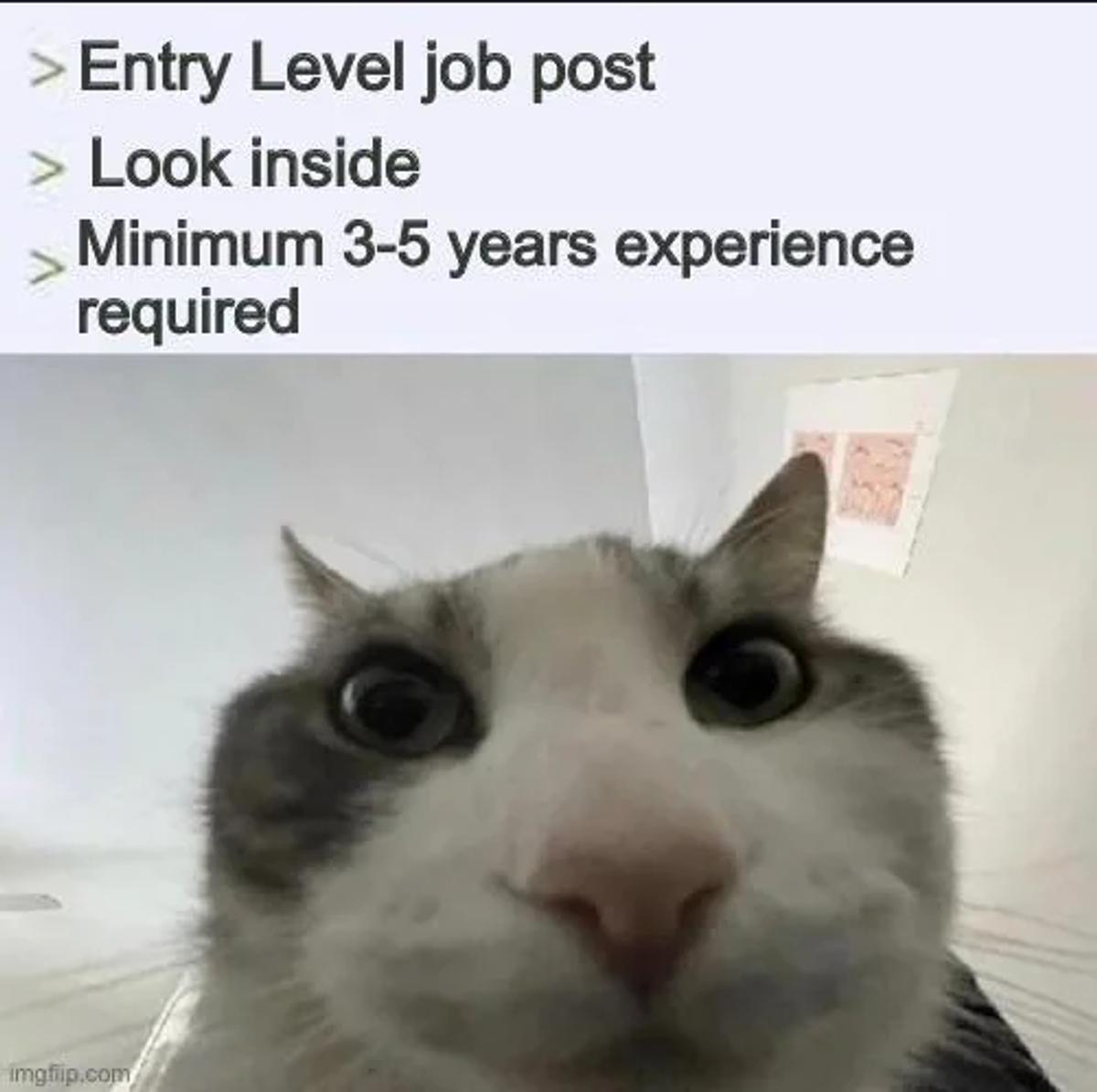
And when you finally do get a response? It's an automated "We've decided to move forward with other candidates." Meanwhile, that "entry-level" Software Engineer posting you applied to is asking for 5+ years of React experience and contributions to open-source projects.
The system feels rigged. And honestly? It kind of is.
But here's what they don't tell you: landing a tech job with no experience isn't about having experience. It's about beating the robot that's rejecting you before a human even sees your resume.
Let me explain.
The Real Villain: ATS Systems Are Ghosting You
You're not getting ghosted because you're unqualified.
You're getting ghosted because Applicant Tracking Systems (ATS) are filtering you out in the first 6 seconds. These bots scan for specific keywords, formatting, and experience markers. If your resume doesn't match what they're programmed to look for, you're out.

And this is the machine that decides lol
The real reason you're not getting interviews has nothing to do with your skills. It's your resume format and keyword strategy.
The job market in 2025 makes this worse. Entry-level hiring in the US grew by just 0.6% this year despite employers claiming they wanted to hire more graduates. In Canada, the job vacancy rate dropped to 2.9%, and youth unemployment sits at 13%.
Translation: fewer jobs, more applicants, stricter bots.
AI is also replacing entry-level roles that used to be stepping stones (data entry, basic admin work, junior support). The roles that remain require you to prove immediate productivity, not potential.
So what do you do when you have no experience but need to prove you're job-ready?
You reframe the experience you already have.
Step 1: Turn Your Projects Into "Experience" (And Make ATS Love It)
Here's the truth: ATS doesn't care if your "experience" came from a paid job or a GitHub repo. It just scans for keywords.
That React app you built for your bootcamp final project? That's experience. The Python script you wrote to automate your fantasy football league? Experience. Your open-source contribution to a CUA project? Also experience.
The mistake most bootcamp grads and students make is listing these under a "Projects" section at the bottom of their resume. ATS doesn't weight that section as heavily as the "Experience" section.
Here's what you do instead:
Reframe your projects as job experience. Create an "Experience" section and list your projects with real business outcomes.
Before (ATS hates this):
- Built a to-do app using React and Firebase
After (ATS loves this):
- Developed full-stack task management application using React, Node.js, and Firebase, implementing user authentication and real-time data synchronization for 50+ beta users
See the difference? The second version is loaded with ATS keywords: React, Node.js, Firebase, user authentication, real-time data synchronization.

Build an entry-level resume with zero work history using the skills + projects + education formula. Turn bootcamp work into professional experience.
📝 Video Transcript
Your resume needs to speak robot before it speaks human.
Use single-column formatting. ATS systems struggle with multi-column layouts, tables, and graphics. Stick to a clean, linear format. The best resume format for 2025 is simple: one column, reverse-chronological order, standard section headers.
Add a "Technical Skills" section at the top. List every language, framework, and tool you've touched (JavaScript, Python, React, Git, REST APIs, SQL, Docker, etc.). ATS scans this section first.
Want to know if your resume will actually pass the bot? Use the Free ATS Checker to see exactly what the system sees. It'll show you which keywords you're missing and how to fix your formatting.

Step 2: Stop Writing Generic Cover Letters (They're Killing Your Applications)
Let's talk about cover letters.
Most people either skip them entirely or copy-paste a generic template that says "I'm passionate about technology and eager to learn."
ATS and hiring managers can smell this from a mile away.
Here's the kicker: a tailored cover letter is what separates you from the 200 other applicants with similar resumes. Cover letters and resumes serve different purposes, and you need both to win entry-level jobs.
Your resume is a keyword document. Your cover letter is a story document.
Your cover letter should connect your project work to the company's actual business needs. Don't just say you built an app. Explain why it matters.
Generic version:
"I built a weather app using React. I am passionate about front-end development."
Tailored version:
"I noticed your team focuses on creating intuitive user experiences for non-technical users. When I built my weather dashboard app, I prioritized accessibility (WCAG 2.1 AA compliance) and mobile-first design, which increased user engagement by 40% in beta testing. I'd love to bring that same focus to your product team."
The second version shows you researched the company, understand their priorities, and can connect your work to business value.
But writing 10 custom cover letters per week is exhausting when you're also studying, working part-time, or just trying to survive.
That's where automation helps.
Step 3: The Secret Weapon (How to Beat the System at Scale)
You need to apply to 5-10 quality jobs per week to have a real shot at landing interviews.
But customizing resumes and writing personalized cover letters for each application? That's 2-3 hours per job. You don't have that kind of time.
This is where HiringMessage.com comes in.
It's not just another template generator. It's an AI-powered system that writes ATS-optimized cover letters and fixes resume formatting issues in seconds.
Here's how it works:
The AI Cover Letter Writer analyzes the job description, pulls relevant keywords, and generates a personalized cover letter that connects your projects to the company's needs. You get 3 free credits when you sign up, then 1 free credit every 24 hours.
Try the AI Cover Letter Writer and see how it transforms your generic template into something that actually gets responses.
The Resume Fixer/ATS Checker scans your resume and shows you exactly what ATS systems see. It highlights missing keywords, formatting errors, and sections that need work. Then it fixes them.
The Experience Miner (this one's underrated) helps you pull specific accomplishments and metrics from your project work. Instead of saying "built an app," it helps you say "developed RESTful API serving 1,000+ requests per day with 99.7% uptime."

see how this image looks nice?
Real story: Joe, a bootcamp grad from Toronto, was getting zero responses. He had the skills but his applications were boring. He used HiringMessage to rewrite his cover letter for an Amazon junior developer role. The AI-generated version emphasized his GitHub contributions and connected his e-commerce project to Amazon's customer obsession principle.
He got the interview. Why? Because his cover letter stood out.
HiringMessage doesn't replace your effort. It amplifies it. You still need to apply strategically, follow up, and prep for interviews. But it removes the 2-hour bottleneck of writing custom applications.
If you're a student or bootcamp grad writing a cover letter with no experience, this tool is built for you.
Step 4: Build a System (Consistency Beats Talent)
Landing a tech job with no experience isn't about one perfect application.
It's about building a repeatable system.
Here's what works:
Apply to 5-10 quality jobs per week. Not 50 random postings. Target companies where your skills match 60-70% of the requirements. You don't need to check every box.
Track your applications. Use a simple spreadsheet: company name, role, date applied, follow-up date. This keeps you organized and prevents you from forgetting to follow up.
Optimize your LinkedIn and GitHub. Recruiters do look at these. Your GitHub should have 3-5 solid projects with clean README files. Your LinkedIn headline should include keywords like "Software Engineer" or "Full-Stack Developer" even if you're entry-level.
Do informational interviews. Reach out to junior developers at companies you want to work for. Ask about their path. This builds your network and sometimes leads to referrals.
Keep building. Every week, add something new to your portfolio. A small CLI tool. A browser extension. A contribution to an open-source project. This shows momentum.
The market is brutal right now. Employers want immediate productivity. AI is eating entry-level tasks. But the roles that remain reward hustle, specificity, and the ability to prove value fast.
You have that. You just need to communicate it properly.

something like this maybe?
The Anti-Advice: Why "Just Network" Is Bad Advice for Beginners
You've probably been told: "Networking is everything. Just reach out to people on LinkedIn."
That's not wrong. But it's incomplete and frustrating for someone with no experience.
Here's why standard networking advice fails:
You don't have a network yet. You're a student or bootcamp grad. You don't know senior engineers who can refer you. Cold messaging strangers on LinkedIn gets ignored 90% of the time.
"Coffee chats" rarely lead to jobs. People will talk to you, give generic advice ("keep applying!"), and then... nothing. It feels like a waste of time.
Networking works when you have social proof. If you already have a job or impressive credentials, people respond. When you're entry-level, you're asking for favors with nothing to offer in return.
What actually works for beginners?
Build in public. Share your projects on Twitter/X, LinkedIn, and GitHub. Document your learning process. This creates inbound interest instead of cold outreach.
Contribute to open source. This is networking disguised as work. You collaborate with real developers, get feedback, and build credibility.
Apply directly with a killer resume and cover letter. This is underrated. Most people network because their applications suck. Fix your applications first.
Networking is valuable. But it's not the solution when you're just starting. You need to create leverage first.
You're Not Unqualified (You're Just Playing the Wrong Game)
The entry-level job market is a mess.
Employers want 3 years of experience for "junior" roles. ATS systems reject qualified candidates over formatting errors. AI is automating the entry points that used to exist.
But here's the truth they won't tell you: the candidates who land jobs aren't the most experienced. They're the ones who know how to communicate their value in a way that beats the system.
You don't need 3 years of experience. You need a resume that speaks robot, a cover letter that tells a story, and the consistency to apply strategically until something clicks.
The tools exist to help you do this at scale. HiringMessage automates the boring parts (keyword optimization, formatting, personalization) so you can focus on the strategic parts (applying to the right roles, building your portfolio, prepping for interviews).
You've got the skills. You've built projects. You're learning every day.
Now make sure the ATS actually sees it.
Start with 3 free cover letters and see how AI-powered personalization changes your response rate.
Then keep applying. Keep building. Keep iterating.
The job is out there. You just need to beat the bot first.
Frequently Asked Questions
Quick answers to common questions about this topic
Do I really need a cover letter for tech jobs with no experience?
Yes. Entry-level roles get 200+ applicants. Your resume lists skills; your cover letter explains why those skills matter. Many hiring managers specifically look for candidates who took the time to write a personalized cover letter because it shows genuine interest. Even if the job posting says "optional," write one.
What ATS keywords should I include on my entry-level developer resume?
Focus on technical skills (JavaScript, Python, React, Node.js, SQL, Git), methodologies (Agile, CI/CD, REST APIs), and soft skills (problem-solving, collaboration, debugging). Pull exact phrases from the job description. If they say "experience with cloud platforms," use that exact phrase instead of "worked with AWS."
How do I explain projects on my resume if I've never had a paid tech job?
List them in your Experience section, not Projects. Frame them like job roles: "Full-Stack Developer | Personal Project | June 2024 - August 2024." Then describe what you built using action verbs and metrics (developed, implemented, deployed, increased, reduced). Focus on outcomes, not just technologies used.
Can AI cover letter writers actually help me get interviews?
Yes, if they're good. Generic templates fail, but AI tools like HiringMessage analyze job descriptions and generate personalized content that connects your background to the role. The key is customization at scale. You still review and tweak the output, but AI removes the 90% of grunt work so you can apply to more jobs.
How many jobs should I apply to per week as an entry-level candidate?
Quality over quantity. Apply to 5-10 well-researched roles per week where you match 60-70% of the requirements. Customize each application. Applying to 50 random jobs with a generic resume gets zero results. Ten targeted applications with optimized resumes and strong cover letters will get you interviews.
Why do entry-level jobs ask for 3 years of experience?
It's a wish list, not a requirement. Employers post their "ideal" candidate knowing they'll settle for less. If you match 60-70% of the skills, apply anyway. Many companies hire candidates with strong fundamentals and train them on the rest. The "3 years experience" line filters out people who self-reject.
What's the best way to beat ATS systems as a bootcamp grad or student?
Use single-column resume formatting, include a Technical Skills section with relevant keywords, and frame your projects as professional experience. Run your resume through an ATS checker to see what the bot sees. Avoid tables, columns, graphics, and creative formatting. Stick to standard section headers like "Experience" and "Education."
Related Articles

How to Get a Tech Job With No Experience in 2026 (Even When Every Entry-Level Role Asks for 3 Years)
Stop getting ghosted by ATS rejecting 75% of resumes. Transform projects into professional experience using exact keywords and tailored cover letters.

The Ultimate Tech Internship Resume Guide: GitHub, Projects, & Portfolios
Learn how to write a tech resume that passes ATS filters in 2025. Get past HR with GitHub links, proper skills formatting, and LaTeX-based templates.

Why Resumes Fail ATS: Key Errors to Avoid
Why resumes fail ATS in 2026: Learn about parsing, keyword issues, formatting mistakes, and critical tips for optimizing entry-level resumes.