How to Land a Tech Job with No Experience: The Cover Letter & Resume Strategy That Actually Works
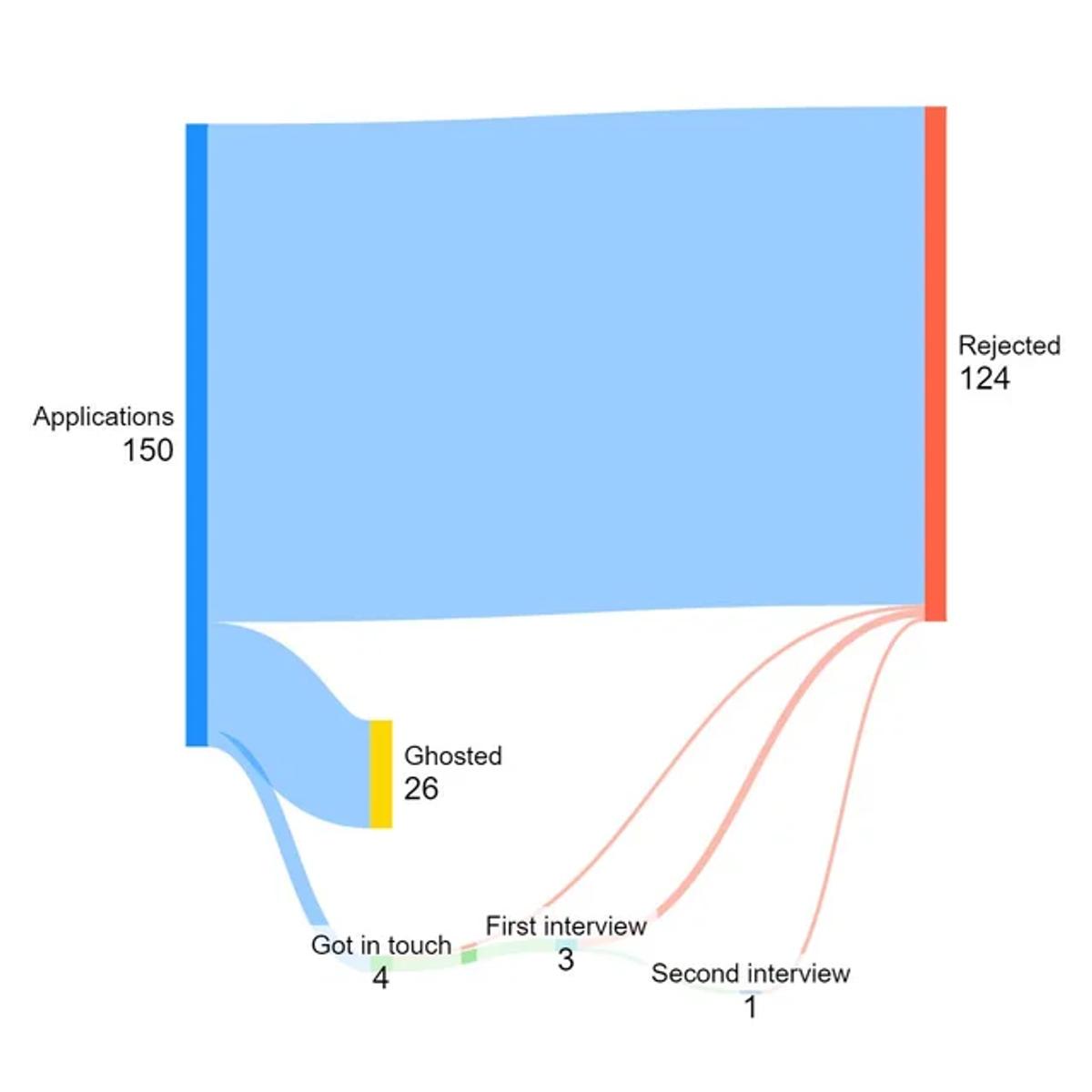
You've sent out 50 applications this week. Radio silence.
You've got the bootcamp certificate. You've built projects. You've done everything "right." But the "entry-level" jobs want 3 years of experience, and the ones that don't? They ghost you anyway.
Here's the truth:
The system feels rigged because it kind of is.
In 2025, entry-level hiring in the US increased by only 0.6%, despite initial predictions for growth. In Canada, youth unemployment sits at 13%, and job vacancy rates have dropped to 2.9%. Employers are prioritizing immediate productivity over potential, and AI is automating the very entry-level roles that used to be your foot in the door.
But here's what they're not telling you: You're not failing. Your resume and cover letter are.

Why Getting a Tech Job with No Experience Feels Impossible
Let me introduce you to the villain of your job search: the ATS (Applicant Tracking System).
99% of Fortune 500 companies now use ATS software to filter resumes before a recruiter ever sees them. These systems scan for keywords, parse your formatting, and assign you a score. If you don't hit 65-75% keyword match, your resume gets buried.
Think about that. A robot is deciding your fate before a human even knows you exist.
The ATS doesn't care that you rebuilt your portfolio three times. It doesn't care about your GitHub stars. It's looking for exact keyword matches like "React," "Python," "API integration," or "Agile methodology." Miss those, and you're done.
Want proof? Upload your resume to a free ATS checker right now. I'll wait. Chances are, your score is lower than you think.

The Real Problem: You're Playing by Old Rules
Standard career advice says "just network" or "get an informational interview." That's fine if you're switching from Google to Meta. But when you're a bootcamp grad competing against 200 other applicants for the same "Junior Developer" role? Generic advice doesn't cut it.
Here's what actually happens:
- Entry-level roles now require "job-ready skills" and practical experience
- Employers are being more selective, focusing on immediate productivity
- AI adoption means you need to demonstrate digital literacy and adaptability just to be considered
Translation: You need to turn your projects into "experience" and prove business value, not just technical skills.
And that starts with fixing your resume and cover letter. Let me show you how.
Step 1: Turn Your Resume Into an ATS-Friendly Weapon
Your bootcamp projects? Those aren't "just projects." They're experience. Here's how to reframe them.
Ditch the Two-Column Layout
I know it looks pretty. The ATS can't read it. Seriously. ATS systems parse single-column layouts with standard headings. Anything fancy (graphics, tables, headers/footers, text boxes) confuses the robot, and you get auto-rejected.
Use this structure instead:
- Header (name, contact info)
- Summary (2-3 lines max)
- Experience (yes, call it "Experience," not "Projects")
- Education
- Skills
- Certifications
Need a format that actually works? Check out the best resume format for 2025 backed by ATS data for a deep dive.

Reframe Projects as Business Experience
Instead of this:
Personal Project: Built a recipe app using React and Firebase
Write this:
Full-Stack Developer | Recipe Discovery Platform (Jan 2025 - Present)
- Engineered a responsive web application serving 200+ users using React, Firebase, and RESTful APIs
- Reduced page load time by 40% through code-splitting and lazy loading optimization
- Implemented user authentication and real-time database syncing for seamless multi-device experience
See the difference? You're not lying. You're speaking the language of business impact. You built something. Users benefited. That's experience.
Optimize for Keywords (Without Keyword Stuffing)
Pull the exact terms from the job description. If they say "JavaScript," don't write "JS." If they want "REST APIs," don't say "API development."
The ATS is literal. It's looking for exact matches.
Create a dedicated "Technical Skills" section and list every relevant technology. But don't just list them; weave them into your experience bullets too. The more natural mentions, the higher your match score.
Step 2: Write a Cover Letter That Actually Gets Read
Here's the thing about cover letters: Most people skip them, and most people who write them use garbage templates.
That's your opportunity.
Why Generic Templates Fail
"I am writing to express my strong interest in the Junior Developer position..."
Stop. The recruiter just fell asleep.
Generic cover letters don't connect your skills to the company's actual needs. They read like Mad Libs: plug in company name, plug in job title, done. The hiring manager can smell it from a mile away.
For a deeper breakdown of why most cover letters fail (and how to fix them), read the real reason you're not getting interviews. Spoiler: It's not your experience. It's your storytelling.
Connect Projects to Business Value
Your cover letter should answer one question: "Why should we care about you?"
Here's the formula:
- Hook: Show you researched the company (mention a recent product launch, blog post, or company value)
- Bridge: Connect your specific skills/projects to their specific needs
- Proof: Give one concrete example of impact (numbers help)
- Close: Express enthusiasm and propose next steps
Example:
I noticed [Company] recently launched [specific feature]. As someone who built a similar real-time notification system for my capstone project (handling 500+ concurrent users), I know the challenges of scaling WebSocket connections and maintaining low latency. I'd love to bring that hands-on experience to your team.
You're not begging for a job. You're demonstrating that you already think like someone on their team.
Still struggling with the "no experience" angle? This guide on how to write a cover letter with no experience walks you through exactly what to emphasize when you're starting from scratch.

Understand the Difference Between Resume and Cover Letter
Quick reality check: They serve different purposes. Your resume is your credentials. Your cover letter is your pitch.
Your resume lists what you did. Your cover letter explains why it matters to this company, for this role. If you're still unclear on the distinction, read cover letter vs. resume: what's the difference and why you need both.
Step 3: The Secret Weapon (How to Land a Tech Job with No Experience at Scale)
Now here's the problem: You need to apply to 5-10 quality jobs per week to get traction. But writing tailored cover letters and tweaking your resume for every single job? That's hours of work.
You're competing against people who have systems. So you need a system too.
Enter HiringMessage.com.
The ATS Resume Fixer
Remember that 65-75% keyword match score I mentioned? Most people have no idea where they stand. HiringMessage's ATS Checker scans your resume against the actual job description and tells you exactly what's missing.
It doesn't just give you a score. It shows you which keywords to add, which sections are being misread, and how to restructure for maximum ATS compatibility.
The AI Cover Letter Writer
Here's where it gets interesting. HiringMessage's AI Cover Letter Writer doesn't spit out generic templates. It reads the job description, analyzes your resume, and generates a tailored cover letter that connects your specific experience to their specific needs.
Real story: Joe, a bootcamp grad with zero professional experience, used HiringMessage to apply to Amazon. His cover letter connected his e-commerce capstone project to Amazon's focus on customer-obsessed product development. He got the interview.
Why? Because his cover letter didn't sound like everyone else's. It was specific. It demonstrated understanding. It showed he'd already thought about their problems.

The Free Plan (Yes, Really)
You get 3 free credits on signup, then 1 free credit every 24 hours. That's enough to test it on your top-choice jobs without dropping cash.
For students and career switchers applying to dozens of roles? It's a no-brainer. Spend 2 minutes generating a tailored cover letter instead of 30 minutes staring at a blank page.
Step 4: The System (Consistency Beats Perfection)
Tools are great. But here's the real secret to landing a tech job with no experience: You need to treat job searching like a job.
Apply to 5-10 Quality Jobs Per Week
Notice I said "quality." Not "spray and pray to 50 random postings."
Target companies where:
- Your skills actually match 60-70% of the requirements
- The company is growing (check LinkedIn for recent hires)
- You can demonstrate genuine interest (you use their product, follow their blog, etc.)
Track Everything
Use a simple spreadsheet or Notion board:
- Company name
- Position
- Date applied
- ATS score (from your resume checker)
- Follow-up date
- Status
Why? Because job hunting is demoralizing. Having data shows you're making progress even when it doesn't feel like it. And it helps you spot patterns (maybe your cover letters for startups get better responses than big tech).
GitHub Profile and Portfolio Projects Matter
This isn't optional anymore. Employers want to see practical, job-ready skills. Your GitHub should have:
- 2-3 polished projects (not 20 half-finished repos)
- Detailed README files explaining what you built and why
- Clean, commented code
Your portfolio site should load fast, look professional, and showcase those same projects with visuals and clear explanations of your problem-solving process.

Why This Works When Everything Else Doesn't
Let's recap the broken system:
- ATS filters out 75% of resumes before humans see them
- Employers prioritize immediate productivity over potential
- Entry-level roles are shrinking while competition is increasing
You can't change the system. But you can beat it at its own game.
By optimizing for ATS, reframing your projects as experience, and writing cover letters that demonstrate business value, you're doing what 90% of other candidates aren't. You're showing up prepared.
And when you use tools like HiringMessage to scale that effort across multiple applications without sacrificing quality? You're not just keeping up. You're ahead.
Land Your Tech Job with No Experience: Start Today
The job market is tough. But it's not hopeless.
You don't need 3 years of experience. You need a resume that passes the ATS, a cover letter that tells your story, and a system for applying consistently to the right roles.
Here's your action plan:
- Run your current resume through the free ATS checker
- Rewrite your "Projects" section as "Experience" with business-focused bullet points
- Generate your first tailored cover letter with HiringMessage's AI tool
- Apply to 5 quality jobs this week
- Repeat
The companies that ghost you aren't rejecting you. They're rejecting a resume that didn't make it past the robot. Fix the resume. Fix the cover letter. And suddenly, your "no experience" stops mattering.
You've got this. Now go get that interview.
Frequently Asked Questions
Quick answers to common questions about this topic
Do I really need a cover letter for every application?
No, but it dramatically increases your chances. About 50% of recruiters say they prefer candidates who submit cover letters, and for competitive entry-level roles, it's often what sets you apart. If the application makes it optional, that's your chance to stand out. Use an AI tool to speed up the process if you're applying to multiple jobs.
How do I know if my resume is ATS-friendly?
Upload it to an ATS checker tool and paste in the job description. Look for a match score of at least 65-75%. If your score is lower, you're missing keywords or using formatting that the ATS can't parse. Common culprits include tables, text boxes, headers/footers, and non-standard section headings.
Can I lie about experience on my resume if I only have projects?
No. But you can reframe projects as experience by using professional language and emphasizing outcomes. Instead of "Personal Project," use a job-title format like "Full-Stack Developer | Project Name" and describe it like a role. You're not lying, you're presenting your work in business terms that employers understand.
Should I apply to jobs that ask for 2-3 years of experience when I have none?
Yes, if you meet 60-70% of the technical requirements. Many companies list "preferred" qualifications that aren't actually required. Your cover letter is where you address the experience gap by connecting your projects and skills to their specific needs. The worst they can say is no.
How long should my cover letter be?
Three to four short paragraphs, about 250-400 words total. Open with a hook that shows you researched the company. Connect your skills to their needs. Give one concrete example of impact. Close with enthusiasm and next steps. If it's longer than half a page, cut it down.
What's the biggest mistake entry-level candidates make on resumes?
Using vague, passive language instead of action verbs and metrics. "Worked on a web app" tells me nothing. "Built a responsive e-commerce platform using React and Node.js, reducing checkout time by 30%" shows impact. Always lead with strong verbs (built, engineered, designed, optimized) and quantify results when possible.
How many applications should I submit before I start worrying?
If you've applied to 30-40 quality jobs with an ATS-optimized resume and tailored cover letters and heard nothing, it's time to reassess. Check your ATS scores, ask someone to review your materials, and make sure you're targeting roles where you actually meet most of the requirements. Job searching is a numbers game, but quality matters more than quantity.
Related Articles

How to Get a Tech Job With No Experience in 2026 (Even When Every Entry-Level Role Asks for 3 Years)
Stop getting ghosted by ATS rejecting 75% of resumes. Transform projects into professional experience using exact keywords and tailored cover letters.

The Ultimate Tech Internship Resume Guide: GitHub, Projects, & Portfolios
Learn how to write a tech resume that passes ATS filters in 2025. Get past HR with GitHub links, proper skills formatting, and LaTeX-based templates.

Why Resumes Fail ATS: Key Errors to Avoid
Why resumes fail ATS in 2026: Learn about parsing, keyword issues, formatting mistakes, and critical tips for optimizing entry-level resumes.