How To Get A Tech Job With No Experience: The Ultimate Student Cover Letter Guide (2025)
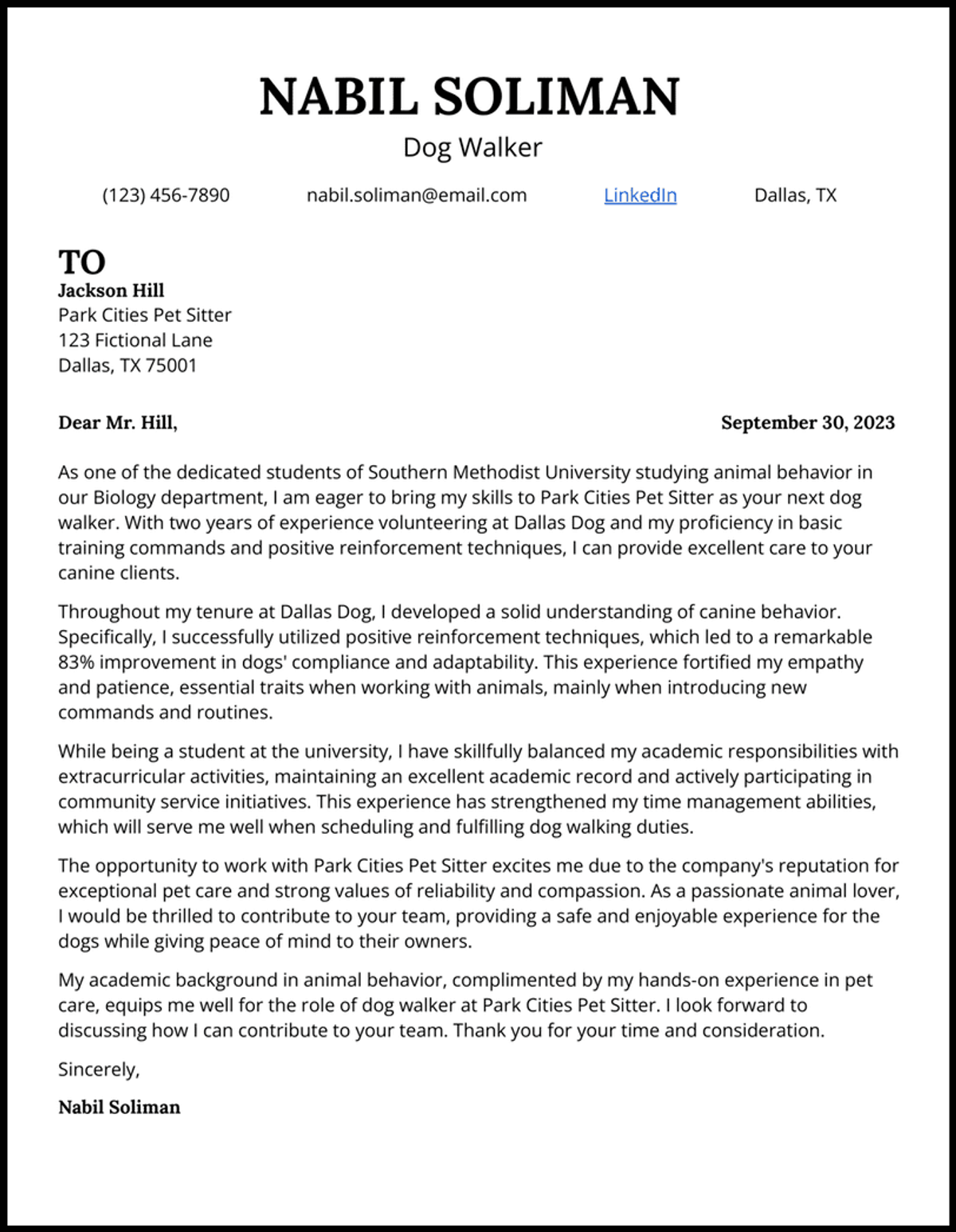
You send out 30 applications.
Silence.
No replies. No feedback. Just the void.
Meanwhile, every “entry-level” tech job wants 2–3 years of experience, 5 frameworks, and “proven production systems.”
It feels rigged.
If you are a student, bootcamp grad, or career switcher trying to land a tech job with no experience in 2025, this guide is for you.
You will learn exactly how to write a cover letter that gets noticed, even if your resume is mostly projects and part-time work.
And you will see how tools like an AI cover letter writer and a resume fixer for ATS can help you beat the bot, not just hope for the best.

Why Getting A Tech Job With No Experience Feels Impossible In 2025
Let’s be real.
The 2025 job market for juniors is rough in both the US and Canada.
Entry-level hiring has basically flatlined in the US, with only a tiny increase over last year.
In Canada, job vacancy rates have dropped and youth unemployment is still much higher than the general population.
At the same time, companies are obsessed with “job-ready” skills.
They want people who can ship code, not just talk about classes.
AI is automating routine tasks, which means fewer traditional “training wheels” roles.
So yes, the system feels stacked against you.
But here is the part everyone forgets.
Because employers care so much about skills and impact, students and new grads who show those clearly can still win.
Your cover letter is one of the few places where you can explain your projects, mindset, and potential in a human way.
Done right, it can make a “no experience” candidate look like a low-risk, high-upside hire.
The Real Villain: ATS And Copy-Paste Applications
You are not just competing with other students.
You are also fighting software.
Most companies use an Applicant Tracking System (ATS) to filter resumes and cover letters before a human even looks at them.
The ATS scans for:
- Relevant keywords from the job description
- Clear sections (like Experience, Projects, Skills)
- Simple formatting it can parse
If your resume is not ATS-friendly, you get filtered out, even if you are qualified.
If your cover letter is generic, a recruiter skims it in 3 seconds and moves on.
That is why tools like a free ATS checker matter.
You need to make sure the format and content of your resume and cover letter are readable by the bot first, then compelling to a human.
To go deeper on how resumes and cover letters work together for entry-level roles, check out this breakdown of cover letter vs resume.
Anti-Advice: Why The Usual Tips Fail You
You have probably heard advice like:
“Just network.”
“Just apply to more jobs.”
“Just be passionate.”
Here is the problem.
If your resume and cover letter do not show clear skills and impact, networking only speeds up rejection.
Applying to more jobs with the same weak documents just multiplies silence.
Another bad tip: “Keep it super professional and formal.”
That usually leads to robotic, lifeless cover letters that sound like everyone else.
Recruiters read hundreds of those per week.
The truth:
- You need a cover letter that sounds like a real human.
- You need to sell your projects like experience.
- You need ATS-friendly structure, not fancy design.
The market is brutal, but it is not random.
There is a system you can use to increase your odds.
Step 1: Fix Your Resume So Projects Count As Experience
You cannot write a powerful cover letter if your resume is a mess.
The two need to work together.
For a tech job with no experience, your projects are your experience.
Use A Simple, Single-Column, ATS-Friendly Format
Multi-column resumes, text boxes, and graphics look cool.
The ATS hates them.
Use a clean, single-column layout with clear headings:
- Summary
- Projects
- Experience (if any)
- Technical Skills
- Education
If you want data on which resume layouts actually pass ATS in 2025, this guide on the best resume format for 2025 is a must-read.
Then run your resume through a resume fixer for ATS to catch issues with formatting and missing keywords.
Turn “School Stuff” Into Real Experience
Most students write something like:
“Completed Python course, got A”
That does not help an employer imagine you doing the job.
Instead, describe your work like a mini case study.
Example 1: Bad vs good
Bad:
“Capstone project for data class.”
Good:
“Built a Python data pipeline that scraped 500+ tweets, cleaned unstructured text, and visualized sentiment trends, helping our team identify top customer complaints.”
Example 2: Bad vs good
Bad:
“Group project website for class.”
Good:
“Developed a responsive React web app with user authentication and REST API integration, improving page load time from 3.5s to 1.2s during testing.”
You are showing:
- Tools used (Python, React, APIs)
- Scale (500+ tweets, load time changes)
- Business-like outcomes (faster, clearer, more usable)
This is exactly what employers mean by “job-ready skills.”
Use A Strong Technical Skills Section
For a tech job with no experience, your technical skills section is prime real estate.
Make it easy to scan in 3 seconds.
Group skills logically:
- Languages: JavaScript, Python, Java, SQL
- Frameworks: React, Node.js, Express, Django
- Tools: Git, GitHub, VS Code, Postman, Figma
- Cloud / DevOps: AWS, Docker, CI/CD (if applicable)
Do not list tools you used once in a tutorial.
Focus on what you can actually use in a project.
Add Portfolio Projects And GitHub
In a skills-based job market, your portfolio projects and GitHub profile can matter more than your GPA.
If you are serious about a tech job with no experience:
- Include 2–4 portfolio projects with links.
- Keep your GitHub profile clean, with clear READMEs and pinned repos.
Example resume bullet that links both:
“Deployed a full-stack MERN app that tracks gym workouts, with JWT auth and MongoDB. Live demo and code available on GitHub.”

If you want help turning your existing resume into an ATS-friendly resume with better project bullets, run it through the ATS Checker + Resume Fixer.
Step 2: How To Write A Cover Letter When You Have No Experience
Now comes the part that feels scary.
You have no “real” job titles.
What do you actually write?
Here is the key mindset shift.
You are not apologizing for being new.
You are proving you can learn fast, ship value, and care about their problems.
For a detailed student-focused breakdown, you can also check this student guide on how to write a cover letter with no experience.
Rule 1: Never Apologize For Being New
Do not start with:
“Although I do not have much experience…”
“Even though I have not worked professionally yet…”
This immediately puts you on the back foot.
Instead, lead with the strengths you do have:
- Projects
- Bootcamp or coursework
- Hackathons
- Open source contributions
- Part-time or non-tech jobs that show reliability
Example strong opening:
“As a Computer Science student who has built and deployed three full-stack web apps, I am excited to apply for the Junior Backend Developer role at [Company].”
You are not begging for a chance.
You are presenting yourself as a builder who is still early in the journey.
Rule 2: The “Project Pivot” Framework
If you lack paid experience, your projects become your proof.
Every strong paragraph in your cover letter should follow a simple pattern:
Project → Skill → Business value → Relevance to their role.
Template:
“In [project], I [what you built]. This taught me [skills / tools] and led to [result]. I would bring the same approach to [specific part of their job description].”
Example for data:
“In my recent capstone project, I used Python and Pandas to build a data scraper that analyzed 500+ tweets about a local retailer. This taught me how to handle unstructured text data, clean noisy inputs, and visualize trends that management could act on. I am excited to bring this experience to your Data Analyst team as you expand your customer insights platform.”
Example for web dev:
“As part of a 4-person team, I developed the frontend for a React-based dashboard that tracks real-time sales metrics. I focused on performance and accessibility, reducing load times from 3.2 seconds to 1.4 seconds and improving Lighthouse scores. Since your posting mentions improving your analytics UI, I would love to help you deliver a smoother, faster experience to your users.”
Suddenly you are not just “a student.”
You are someone who builds things that matter.
Rule 3: Write A Strong, Specific Opening Sentence
Recruiters skim cover letters in under 10 seconds.
If your first sentence is generic, you lose them.
Avoid:
- “I am writing to apply for…”
- “Please accept my application for…”
Try something like:
“As a bootcamp grad who has been using [Company]’s API in personal projects for the last six months, I was excited to see an opening on your Developer Experience team.”
or
“As a self-taught developer who rebuilt my campus club’s website and increased signups by 42%, I am excited to apply for the Junior Frontend Developer role at [Company].”
Two things are happening here:
- You show familiarity with the company.
- You show you can deliver outcomes, not just code.
Rule 4: Connect To Their Business, Not Just Their Tech Stack
Many junior candidates list technologies:
“I know React, Node, MongoDB, AWS.”
Recruiters see this hundreds of times.
What stands out is when you connect your skills to business problems.
Example:
“You mentioned in the job description that you are building internal tools for non-technical teams. In my last project, I designed a React interface for a student club dashboard, focusing on clear labels and simple flows for users who were not tech-savvy. That experience taught me how to translate complex data into simple, usable screens.”
This makes you look like someone who thinks beyond code.
Rule 5: Close With Confidence, Not Desperation
End your cover letter by reminding them what you bring, not by begging.
Example closing:
“Thank you for considering my application. I would love the chance to contribute my experience building real projects, my willingness to learn new tools quickly, and my curiosity about backend systems to the [Team Name] at [Company].”
You are stating value, not asking for mercy.
Step 3: The Secret Weapon For A Tech Job With No Experience: HiringMessage
Knowing what to write is one thing.
Staring at a blank page after a long day of classes or work is another.
This is exactly why HiringMessage exists.
HiringMessage is a job search co-pilot for students, bootcamp grads, and career switchers who feel stuck.
Experience Miner: Find Skills You Forgot You Had
When you are new, it is hard to see your own experience clearly.
You think “I have nothing” when in reality you have:
- Class projects
- Personal apps
- Hackathons
- Freelance or volunteer work
- Part-time jobs with transferable skills
The Experience Miner inside HiringMessage asks you targeted questions about:
- Courses you took
- Portfolio projects
- GitHub repos
- Leadership or teamwork experiences
Then it turns those into strong bullet points and cover letter material.
Instead of “Did group project,” you get:
“Led a 3-person team to design and deploy a Node.js REST API that served 1,000+ test requests with 99.9% uptime during the course demo.”
AI Cover Letter Writer: Tailored Letters At Scale
You should not send the same cover letter to 30 applications.
But realistically, you do not have 3 hours per day to write unique letters.
HiringMessage’s AI Cover Letter Writer solves this.
You paste the job description, add your resume or project list, and the AI:
- Generates a custom hook referencing the company
- Applies the “Project Pivot” framework to your real projects
- Keeps the tone human, not robotic
- Aligns your skills with the job requirements
You can then tweak wording to sound more like you in a few minutes.
This is how “Joe,” a bootcamp grad, went from being ghosted to landing an interview at Amazon.
His resume did not change much.
What changed was how clearly his cover letter connected his projects to the specific problems on the job posting.
HiringMessage helped him frame his story like a candidate with potential, not just another junior.
Resume Fixer & ATS Checker: Beat The Bot First
Before a recruiter reads your great cover letter, the ATS has to approve you.
The Free ATS Checker inside HiringMessage:
- Scans your resume format for ATS issues
- Checks if your technical skills and keywords match the job description
- Suggests improvements to help your entry-level developer resume pass initial filters
You can restructure your resume into an ATS-friendly resume that still highlights your projects and GitHub.
Pricing And Free Plan
HiringMessage runs on a generous free model.
You get:
- 3 free credits when you sign up
- Then 1 free credit every 24 hours
You can use those credits to:
- Fix and scan your resume for ATS
- Generate AI-powered cover letters for different roles
- Run the Experience Miner to uncover stronger bullet points
This gives you enough firepower to upgrade your applications every week without paying upfront.
Step 4: Build A Simple System To Land A Tech Job With No Experience
Winning this market is not about one perfect resume.
It is about consistent, high-quality applications.
Here is a realistic weekly system.
1) Target The Right Jobs
Focus on roles where juniors actually have a shot, such as:
- Junior Developer / Software Engineer
- QA Engineer / Test Automation
- Data Analyst (entry level)
- Technical Support Engineer
- Implementation Specialist
- Product Support / Customer Success for tech tools
Look for postings that mention:
- “1–2 years experience” rather than 3–5
- “Recent graduates welcome”
- Focus on skills and projects, not just pedigree
2) Aim For 5–10 High-Quality Applications Per Week
Instead of applying to 50 random roles with a generic cover letter, do this:
- 5–10 carefully chosen roles per week
- Each with a tailored resume and cover letter
- Each saved in a simple job application tracking sheet
You can use a simple spreadsheet with columns like:
- Company
- Role
- Link
- Date applied
- Contact person
- Status
This helps you follow up and see what is working.
3) Use Informational Interviews, Not Just Cold Applications
The old advice to “network” is vague.
Think about it like this:
Use informational interviews to warm up your applications.
Steps:
- Find junior or mid-level employees at your target companies on LinkedIn.
- Send a short, respectful note asking for a 10–15 minute chat about how they got in.
- Ask about skills they use daily, projects they work on, and what they wish new hires knew.
You can then reflect that knowledge in your cover letter:
“After speaking with [Employee Name] on your [Team Name], I learned how much your team values clear communication with non-technical stakeholders. In my last project, I presented our analytics dashboard to a non-technical club committee and adjusted the design based on their feedback. I would bring that same communication mindset to your team.”
This instantly makes your letter stand out.
4) Keep Skilling Up While You Apply
The market in 2025 rewards people who keep learning.
You will stand out if you show progress over time:
- Build one new portfolio project every 4–6 weeks.
- Improve your GitHub profile with better documentation.
- Take short courses on AI tools, data analysis, or cloud basics.
Mention these actively in your cover letter:
“I am currently completing a course on building REST APIs with Node.js and Express, and applying what I learn to an API for a task management app.”
You look like someone moving forward, not waiting to be picked.
Conclusion: You Can Still Land A Tech Job With No Experience
The market is harder.
The bar is higher.
AI and ATS filters exist, and there are fewer “easy” entry-level spots.
But it is not hopeless.
If you:
- Turn your projects into real experience
- Use an ATS-friendly resume format
- Write cover letters that connect your work to business value
- Apply consistently to the right roles
You absolutely can land a tech job with no experience on paper.
You do not have to do this alone.
Use tools like HiringMessage’s AI Cover Letter Writer and ATS Checker to upgrade your applications and beat the bot.
Your potential is real.
You just need to frame it so employers can see it.
Frequently Asked Questions
Quick answers to common questions about this topic
Can you really get a tech job with no experience?
Yes, but “no experience” cannot mean “no proof.” You need portfolio projects, a solid GitHub profile, and a clear technical skills section that show you can do the work. Your cover letter then explains how those projects map to real job responsibilities.
Do recruiters even read cover letters for entry-level roles?
Some do, some do not, but the ones who do are usually the ones you most want to impress. Even when they skim, a strong opening and one or two powerful project examples can be enough to move you to the interview pile. Also, some ATS tools and hiring workflows explicitly ask for and score cover letters, so skipping them can hurt you.
What should a cover letter say if I have no experience at all?
Focus on: Projects from school, bootcamps, or personal learning Transferable skills from part-time work (customer service, problem solving, communication) Your ability to learn quickly and adapt to new tools Use the Project Pivot: project, skills, outcome, and how it relates to their job description.
How long should my cover letter be for an entry-level tech job?
Aim for 3–5 short paragraphs, ideally under one page. Each paragraph should be 1–3 sentences, focused and scannable. Quality and relevance matter far more than length.
How do I make my resume ATS-friendly as a student or bootcamp grad?
Use a single-column layout with clear section headings. Avoid tables, graphics, or unusual fonts. Include keywords from the job description in your skills and experience sections, and run your resume through a free ATS checker to catch issues.
Is it okay to use an AI cover letter writer?
Yes, as long as you treat AI as a co-writer, not a copy-paste machine. Use tools like the HiringMessage AI Cover Letter Writer to generate a strong draft tailored to the job, then personalize it with your voice, details, and specific project examples. Recruiters can spot generic fluff, but they appreciate a clear, human story supported by real skills.
Why am I not getting interviews even though I meet the requirements?
Often it is not your experience that is the problem. It is how you present it. If your resume is not ATS-friendly, if your cover letter is generic, or if your projects do not clearly show impact, you get filtered out early.
Related Articles

How to Get a Tech Job With No Experience in 2026 (Even When Every Entry-Level Role Asks for 3 Years)
Stop getting ghosted by ATS rejecting 75% of resumes. Transform projects into professional experience using exact keywords and tailored cover letters.

The Ultimate Tech Internship Resume Guide: GitHub, Projects, & Portfolios
Learn how to write a tech resume that passes ATS filters in 2025. Get past HR with GitHub links, proper skills formatting, and LaTeX-based templates.

Why Resumes Fail ATS: Key Errors to Avoid
Why resumes fail ATS in 2026: Learn about parsing, keyword issues, formatting mistakes, and critical tips for optimizing entry-level resumes.